


Chloroform
What is chloroform?
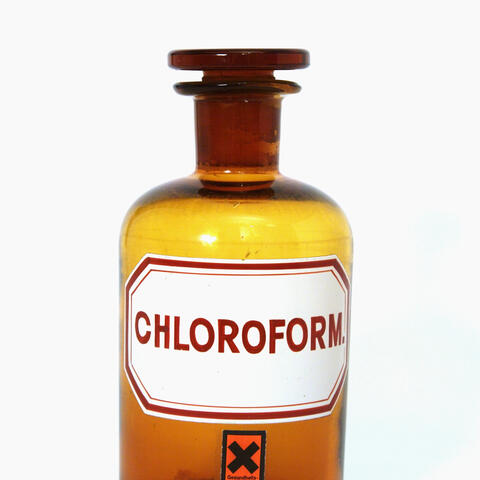
Chloroform is a colorless liquid with a strong, sweet smell, and a slightly sweet taste. It is a naturally occurring chemical, but most of the chloroform in the environment is human-made.
Chloroform is used to make refrigerants and can be formed during the break-down of other compounds. It may be found in small amounts in chlorinated drinking or swimming pool water. Historically, chloroform has also been used for controlling insects and pests in stored grain and as a dry cleaning spot remover.
Chloroform evaporates quickly. Most of the chloroform that ends up in lakes, streams, or soil evaporates into the air. However, chloroform that seeps through soil into groundwater can remain unchanged for many years.
How can I be exposed to chloroform?
People can be exposed to chloroform from air, direct contact, and drinking water.
Air
People who work in a place that makes chloroform or uses products that contains chloroform can be exposed to it in air.
Direct contact
People who use products that contain chloroform and people who work in places where chloroform is used can be exposed from direct contact through skin.
Drinking water
People who live near places where chloroform is used or was spilled or disposed of in the past can be exposed to chloroform from drinking water. You may also get exposed to low levels of chloroform when using contaminated water for drinking or for preparing food.
How can chloroform affect my health?
People exposed to low or moderate levels of chloroform in air may experience tiredness, dizziness, and headaches.
People exposed to high levels of chloroform may have trouble breathing and may have an increased risk of liver and kidney function damage. Studies in research animals have shown that long-term exposure to chloroform could result in cancerous liver and kidney tumors.
How can I protect myself and my family from chloroform?
When using a product that contains chloroform:
- Follow the directions on the product label
- Use the product in a well-ventilated area - use a fan or have a window open.
- If you can smell the chemical, stop what you are doing and move to a well-ventilated area.
- Seek medical attention if you experience tiredness, dizziness, and headaches during or after using a product with chloroform.
People who work with chloroform or products that contain chloroform:
- Read and follow instructions provided by your employer.
- Wear all required personal protective equipment (such as gloves, masks, coveralls, and respirators).
- Shower or change clothes before leaving work to avoid bringing chemicals home with you. If this is not possible, change as soon as you get home and wash your work clothes separately from the rest of you and your family’s laundry.
If you live near a place where chloroform is or was used:
- Call 911 if you smell chemical odors in your home.
- Reach out to DHS staff by emailing DHSEnvHealth@dhs.wisconsin.gov to learn what is being done to address the contamination.
Follow the directions on the product label.
Wear gloves, eye protection, and long sleeves while working with products that contain chloroform.
If you get the product on your skin, wash the area with plenty of soap and water. Seek medical attention if skin irritation or a rash occurs.
If you get the product in your eyes, rinse with water for several minutes. Remove contact lenses, if present and easy to do, and continue rinsing. Seek medical attention if eye irritation continues.
Do not let children play near facilities that work with chloroform or hazardous waste sites.
Public water users
Community water systems are required to test for chloroform on a regular basis. If the level of chloroform is above Wisconsin's drinking water standard, your water system will issue a public notice.
The public notice will include information on the levels detected, the actions that the system is taking to address the problem, and any steps that you should take to reduce your chloroform exposure.
Private well users
Private well users should test for chloroform if they live near an industrial site that produces or uses chloroform, a dry cleaner, or are concerned about contamination from a nearby source of chlorinated water.
When testing, it's best to use a Wisconsin certified lab.
If the chloroform level equals or is greater than 6 micrograms per liter (µg/L):
- Use a different source of water for drinking and preparing foods that take up a lot of water. Options include bottled water, water from a well without issues, and water from a public system without violations.
- Find a long-term solution. Options include installing a certified treatment device and drilling a new well.
Our Water Treatment Devices for Private Well Contaminants fact sheet, P-03494 (PDF available in English, Spanish, Hmong), has information on common certified treatment devices and instructions for how to find them, including volatile organic compounds (VOCs) like chloroform.
The Wisconsin Department of Natural Resources (DNR) well compensation grants provide funds to address public health hazards in private wells.
Who regulates chloroform in Wisconsin?
The Department of Natural Resources (DNR) regulates how much chloroform can be released into the air and groundwater in Wisconsin.
DNR has set a residential indoor air vapor action level (VAL) for chloroform.
DNR regulates how much chloroform can be in water served by public water systems and oversees the clean up of contaminated sites.
Related topics
Our groundwater standards page has information on how Wisconsin's groundwater standards are set, DHS' role in the process, and a summary of the current and recommended standards, including chloroform.
The Wisconsin Groundwater Coordinating Council's annual report to the Legislature summarizes the operations and activities occurring within the state to address groundwater issues including information on volatile organic compounds (VOCs) such as chloroform.
The DNR provides more information on how residential indoor air vapor action and screening levels are set.
The DNR's Bureau of Remediation and Redevelopment Tracking System on the Web (BRRTs on the Web) provides information on contaminated properties and other cleanup and redevelopment activities in Wisconsin including chloroform sites.
The Agency for Toxic Substances and Disease Registry's ToxFAQs page has more information on chloroform exposure routes and health effects.