



Healthcare-Associated Infections: Precautions
Many precautions must be taken when caring for others to prevent the spread of disease. Below, you can find information on standard precautions, transmission-based precautions, and enhanced barrier precautions, which are guidelines for health care personnel to use to protect themselves and those for whom they provide care.
Standard precautions
Standard precautions are a set of infection control practices used to prevent transmission of diseases that can be acquired by contact with blood, body fluids, non-intact skin (including rashes), and mucous membranes. Standard precautions should be used when providing care to all patients and residents, whether they appear infectious or symptomatic or not. Standard precautions apply at all times and in all locations of health care. The components of standard precautions include hand hygiene, sharps safety, cleaning and disinfection, respiratory hygiene, and waste disposal.
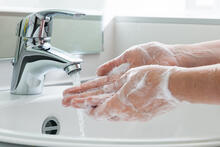
Hand hygiene refers to cleaning your hands, either by washing with soap and water, or using alcohol-based hand rub (ABHR).
Hand hygiene should be performed:
- Before and after contact with a patient or resident.
- Immediately after touching blood, body fluids, non-intact skin, mucous membranes, or contaminated items (even when gloves are worn during contact).
- Immediately after removing gloves.
- When moving from contaminated body sites to clean body sites while providing care.
- After touching objects and medical equipment in the immediate patient-care vicinity.
- Before eating.
- After using the restroom.
- After coughing or sneezing into a tissue as part of respiratory hygiene.
ABHR is the preferred method of hand hygiene in most clinical situations. However, soap and water should be used when hands are visibly soiled, after using the bathroom, and before eating. Health care personnel should also use soap and water after caring for a patient or resident with known or suspected infectious diarrhea and after exposure to spores such as Clostridioides difficile (C. diff).
Resources
- Hand Hygiene Observations, F-02475 (PDF), DHS: Download the adaptable tool for conducting hand hygiene audits.
- Hand Hygiene in Healthcare Settings, CDC (Centers for Disease Control and Prevention): Visit the webpage for training and education resources, guidance, and frequently asked questions on hand hygiene in health care settings.
The following areas should be cleaned routinely:
- Patient and resident care areas.
- Common waiting areas.
- Other areas with potentially contaminated surfaces or objects frequently touched by staff, visitors, residents, patients, such as:
- Doorknobs.
- Sinks.
- Toilets.
- Other surfaces and items near clients.
These areas should be cleaned with EPA-registered disinfectants, following the manufacturer's instructions for use, including amount, dilution, and contact time.
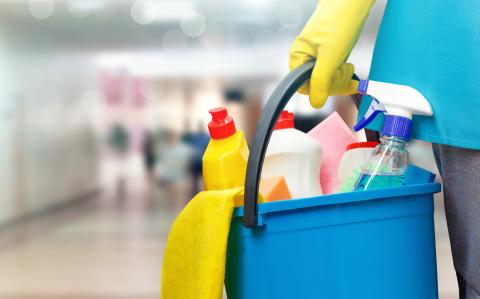
Housekeeping surfaces, such as floors and walls do not need to be disinfected unless visibly soiled with blood or body fluids. They may be routinely cleaned with detergent only or a detergent and disinfectant product.
Most disinfectants are not effective in the presence of dirt and organic matter, therefore cleaning must occur before disinfection. Wet a cloth with the disinfectant, wipe away dirt and organic material, then apply the disinfectant to the item using a clean cloth, and allow to air dry for the time specified by the product manufacturer. Some patient care items may be damaged or destroyed by certain disinfectants. Consult with the manufacturer of the items before applying disinfectants.
Some pathogens, such as norovirus and C. diff are not inactivated by commercial disinfectants routinely used in health care settings. In situations where contamination with these pathogens is suspected, a bleach solution (1:10) is recommended for disinfecting contaminated surfaces and items. Appropriate personal protective equipment (PPE) must be worn if preparing a fresh bleach solution. Please note that a homemade bleach solution should be discarded after 24 hours.
In addition, there are some multidrug-resistant organisms (MDROs) that require specific disinfectants to effectively kill the organism. Refer to the DHS Disinfectant Considerations for Multidrug-Resistant Organisms, P-03400 (PDF) fact sheet as you assess which disinfectants are effective against a specific MDRO.
Patients or residents in waiting rooms or other common areas can spread infections to others in the same area or to health care staff. Measures to avoid spread of respiratory secretions should be promoted to help prevent respiratory disease transmission.
Elements of respiratory hygiene and cough etiquette
- Cover the nose and mouth with a tissue when coughing or sneezing or use the crook of the elbow to contain respiratory droplets. Use tissues to contain respiratory secretions and discard them in the nearest waste receptacle after use.
- Perform hand hygiene immediately after contact with respiratory secretions and contaminated objects or materials.
- Ask patients with signs and symptoms of respiratory illness to wear a surgical mask while waiting in common areas or place these clients immediately in examination rooms or areas away from others. Provide tissues and no-touch receptacles for used tissue disposal.
- Space seating in waiting areas at least three feet apart to minimize close contact among people in those areas.
- Provide supplies, such as tissues, waste baskets, ABHR, and surgical masks, in waiting and other common areas. Place cough etiquette signs where the general public can see them.
The Wisconsin Department of Natural Resources (DNR) regulates the management of medical waste under Wis. Admin. Code ch. NR 526. Anyone handling, storing, or disposing of medical waste is covered under this chapter. Home generators of medical waste are exempt, except for rules related to the safe disposal of sharps.
Sharp items
Sharp items should be disposed of in containers that are:
- Puncture resistant.
- Leak proof.
- Closable.
- Labeled with the biohazard symbol or are red in color.
Sharps containers should be replaced when filled to the indicated full line. Items that should be discarded into sharps containers include:
- Contaminated items that may easily cause cuts or punctures in the skin, such as:
- Used needles.
- Lancets.
- Broken glass.
- Rigid plastic vials.
- Unused needles and lancets that are being discarded.
- Syringes or blood collection tube holders attached to needles (these must be discarded still attached to the needles).
Non-sharp items
Non-sharp disposable items saturated with blood or body fluids (fluid that can be poured or squeezed from the item, fluid is flaking or dripping from the item, etc.) should be discarded in biohazard bags that are:
- Puncture-resistant.
- Leak-proof.
- Labeled with a biohazard symbol or red in color.
Examples of items that this may include are used PPE and disposable rags or cloths.
Health care settings that generate infectious waste can transport infectious waste themselves or contract with a waste hauler to collect and transport the waste. Organizations that generate less than 50 pounds of infectious waste per month do not need a license from DNR to haul infectious waste from their facility to a waste disposal site.
A health care setting that generates infectious waste is required to maintain a log of waste that is transported from the facility, regardless of the amount or how it is transported. The log must contain the:
- Date of disposal.
- Location where waste is transported.
- Name of the person transporting the waste.
- Amount and type of waste transported (for example, three sharps containers, or five biohazard bags).
Care must be taken to contain waste during transport, keep waste separate from clean items in the transport vehicle, and clean and disinfect areas of the vehicle containing infectious waste before hauling clean items and materials.
Safe handling of needles and other sharp devices is a component of standard precautions to prevent health care worker exposure to bloodborne pathogens. The Needlestick Safety and Prevention Act mandates the use of sharps with engineered safety devices when suitable devices exist.
- The safety devices on needles and other sharps should be activated immediately after use.
- Used needles should be discarded immediately after use and not be recapped, bent, cut, removed from the syringe or tube holder, or otherwise manipulated.
- Any used needles, lancets, or other contaminated sharps should be placed in a leak-proof, puncture-resistant sharps container that is either red in color or labeled with a biohazard label.
- Do not overfill sharps containers. Discard when two-thirds full or when contents are at the "full" line indicated on the container.
- Used sharps containers may be taken to a collection facility, such as an area pharmacy, hospital, or clinic that provides this service.
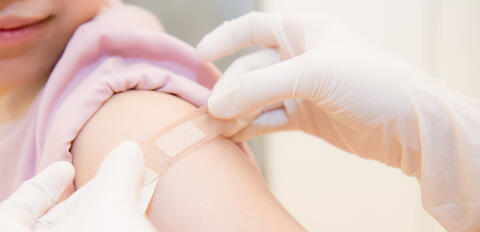
Outbreaks of hepatitis B and C infections, as well as other microorganisms in U.S. ambulatory care facilities, have prompted the need to re-emphasize safe injection practices. All health care personnel who give injections should strictly adhere to the CDC recommendations on injection safety, which include use of:
- Use of a new needle and syringe every time a medication vial or IV bag is accessed.
- Use of a new needle and syringe with each injection of a client.
- Use of medication vials for one client only, whenever possible.
An exposure requiring evaluation and medical attention occurs when blood or any other potentially infectious material (OPIM) is involved in:
- A puncture of the skin with a needle, lancet, or other contaminated sharp item.
- A splash, spray, or other transmission into the eyes, mouth, or nose.
- Contact with blood or OPIM onto an open wound, an oozing lesion, or other area where there is significant skin breakdown.
Learn about bloodborne pathogens and reportable exposures on the DHS Reportable Exposures webpage.
Resources
- Guidelines for Isolation Precautions: Preventing Transmission of Infectious Agents in Healthcare Settings (2007), CDC: See the safe injection practices section for recommendations on the use of needles, cannulas that replace needles, and intravenous delivery systems.
- Preventing Unsafe Injection Practices, CDC: Read the webpage with background and recommendations regarding injection practices.
- Injection Safety Resources, CDC: Access clinical care tools, fact sheets, posters, and videos for health care providers.
Transmission-based precautions
Transmission-based precautions are used in addition to standard precautions when the use of standard precautions alone does not fully prevent communicable disease transmission. There are three types of transmission-based precautions. The type of precautions used depends on the mode of transmission of a specific disease. Some diseases require more than one type of transmission-based precaution.
Types of transmission-based precautions
- Use contact precautions in addition to standard precautions when in contact with individuals known or suspected of having diseases spread by direct or indirect contact (examples include norovirus, rotavirus, draining abscesses, and head lice).
- Place and pay attention to signage (PDF) outside of patient or resident room.
- Don (put on) gloves and a gown when entering a patient or resident room and when in contact with the individual, surfaces, or objects within their environment.
- Clean and disinfect all reusable items taken into an exam room or home before removal. Disposable items should be discarded at the point of use.
In addition to standard precautions, wear a surgical mask when within three feet (six feet for smallpox) of people known or suspected of having diseases spread by droplets.
Examples include:
- Influenza
- Pertussis
- Meningococcal disease
- Mumps
- Rubella
Use the following measures in addition to standard precautions when in contact with individuals known or suspected of having diseases spread by fine particles dispersed by air currents (examples include tuberculosis, measles, and SARS):
- Put on a National Institute for Occupational Safety and Health (NIOSH)-certified, fit tested N95 respirator just before entry to an area of shared air space and wear at all times while in shared air space. Remove and discard respirator just after exiting area. The respirator may be discarded into the regular trash unless contact precautions must also be followed. In this case, place the respirator in a plastic zip-lock bag, seal and then discard into the trash. A powered air-purifying respirator (PAPR) may also be used.
- If available, portable high-efficiency particulate air (HEPA) filtration units may be operated in the area where the infected individual is located to filter out infectious particles. However, use of such a unit does not eliminate the need for employees to wear respiratory protection.
Resources on transmission-based precautions
- Transmission-Based Precautions Reference Guide, P-03366 (PDF), DHS: See a reference guide on transmission-based precautions for common diseases encountered in health care settings.
- Guidelines for Isolation Precautions: Preventing Transmission of Infectious Agents in Healthcare Settings (2007), CDC: See guidelines on using isolation precautions to prevent transmission of infectious agents in health care settings.
- Respiratory Protection Programs, DHS: See the DHS webpage with resources and frequently asked questions on respiratory protection programs.
Enhanced barrier precautions for nursing homes
Enhanced barrier precautions (EBPs) expand the use of PPE beyond situations in which exposure to blood and body fluids is anticipated and incorporate gown and glove use for high-contact resident care activities where multidrug-resistant organisms (MDROs) may be transferred to staff hands, equipment, and clothing. EBPs address the growing number of outbreaks where MDRO transmission is believed to have occurred from residents who were colonized with an organism, but not actively infected. EBPs offer a mid-point between standard and contact precautions, and were developed to protect at-risk residents, while being less restrictive than contact precautions. They also consider the types of activities that pose a higher transmission risk in the more home-like environment of skilled nursing facilities for residents who may live there for many years.
Per CDC recommendations, EBPs apply to:
- Residents who are infected or colonized with an MDRO when contact precautions do not otherwise apply.
- Residents who have chronic wounds and/or indwelling medical devices such as a central line, urinary catheter, feeding tube, tracheostomy, or ventilator, regardless of MDRO status.
The Wisconsin HAI Prevention Program has outlined key considerations regarding the expanded guidelines and a staged approach to implementing EBPs in Wisconsin nursing homes.
At minimum, EBPs should be implemented for targeted MDROs including:
- Pan-resistant organisms (meaning the organism was resistant to all drugs against which it was tested).
- Carbapenemase-producing carbapenem-resistant Enterobacterales.
- Carbapenemase-producing carbapenem-resistant Pseudomonas spp.
- Carbapenemase-producing carbapenem-resistant Acinetobacter baumannii.
- Candida auris.
CDC also recommends that nursing homes consider implementing EBPs for other epidemiologically important MDROs, which may include:
- Methicillin-resistant Staphylococcus aureus (MRSA).
- ESBL-producing Enterobacterales.
- Vancomycin-resistant Enterococci (VRE).
- Multidrug-resistant Pseudomonas aeruginosa.
- Drug-resistant Streptococcus pneumoniae .
This is at the discretion of each facility based on local risk assessment and should include a discussion among facility leadership, including the medical director. The risk assessment should consider:
- MDRO activity within the building, both past and current.
- MDRO prevalence, transmission, and outbreaks.
- MDRO prevalence within the geographic region and among health care transfer networks.
Because they present an increased risk for MDRO transmission, staff should wear a gown and gloves when performing high-contact resident care activities with residents in EBPs. Per CDC, these activities include:
- Dressing.
- Bathing or showering.
- Transferring.
- Providing hygiene.
- Changing linen.
- Changing briefs or assisting with toileting.
- Using or caring for devices such as central lines, urinary catheters, feeding tubes, tracheostomies, or ventilators.
- Caring for any wound or skin opening that requires a dressing.
Gowns and gloves are not required for resident care activities other than those listed above, unless otherwise necessary for standard precautions.
Note that unlike contact precautions, residents on EBPs are not restricted to their rooms. These residents can participate in group activities and move freely throughout the residential care facility, without special precautions. EBPs are only used when staff are providing care designated as high contact.
Resources on EBPs
- Implementation of PPE in Nursing Homes to Prevent Spread MDROs, CDC
- Frequently Asked Questions (FAQs) about Enhanced Barrier Precautions in Nursing Homes, CDC
- Considerations for Use of Enhanced Barrier Precautions in Skilled Nursing Facilities (PDF), CDC
- Recommendations for Prevention and Control of Targeted Multidrug-Resistant Organisms in Wisconsin Nursing Homes, P-03250 (PDF) DHS
Questions about HAIs? Contact us!
HAI website | Phone: 608-267-7711 | Fax: 608-261-4976