


Oral Health Program: Information for All
On this page you will find fact sheets and links sorted by topic. Oral health professionals can find resources on our Information for Health Care Professionals webpage.
Resources
Please explore each section to locate the information you find most helpful.

How does oral health affect general health?
- Shared risk factors link oral health to diseases like cancer, diabetes, stroke, and heart disease.
- Oral health affects people physically and psychologically by influencing how they speak, chew, taste food, and socialize. The mouth must be kept healthy to function correctly.
Risk factors for oral health:
- Commercial tobacco use (smoking tobacco, smokeless tobacco, and vaping)
- Alcohol use
- Poor nutrition such as high sugar intake
- Poor oral hygiene
Oral diseases:
- Dental cavities: Cavities, also known as dental caries or tooth decay, are caused by the breakdown of the tooth’s enamel by acids.
- Gum disease: Plaque grows below the gum line and irritates the gums. The teeth and gums separate, which causes the tissues and bones to break down around the mouth.
- Oral cancer: Oral cancer is found in the mouth and throat. It can appear as red or white patches, lumps, numbness, or swelling.
Tips to improve oral health:
- Drink fluoridated water.
- Brush teeth twice per day with fluoride toothpaste.
- Floss teeth daily.
- Visit a dental provider at least once a year.
- Avoid commercial tobacco use.
- Limit alcohol use.
- Eat a healthy diet.
Other resources
- Adult Oral Health National Institute of Dental and Craniofacial Research (NIDCR), English-Spanish: Information for patients and caregivers on adult oral health topics. Learn more about burning mouth syndrome, dry mouth, diabetes and oral health, and temporomandibular joint syndrome. Download or order free printed copies of publications.
- CDC Oral Health for Adults CDC (Centers for Disease Control and Prevention), English-Spanish: Information on adults oral health, chronic disease and what adults can do to maintain their oral health.
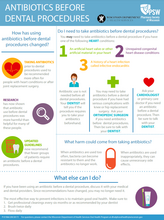
Antibiotics Before Dental Procedures, P-01966 (PDF) DHS publication: Information for patients about taking Antibiotics Before Dental Procedures.
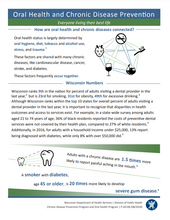
Oral Health and Chronic Disease Prevention, P-02106 (PDF) DHS publication: Information on the connection between oral health and chronic disease.
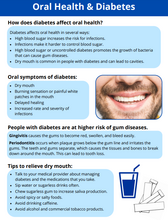
Oral Health and Diabetes, P-00140 (PDF) DHS publication: Fact sheet explains the relationship between diabetes and oral health.
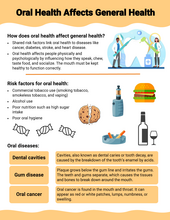
Oral Health Affects General Health, P-00159 (PDF) DHS publication: Explains the relationship between general health and oral health.
How does oral health affect children?
- One of the most common chronic diseases for children is tooth decay, also known as cavities.
- Cavities are painful and can lead to tooth breakdown. If left untreated, they can cause problems with eating, speaking, and learning.
- Cavities are expensive to fix and lead to missed school and lower grades.
Chances of cavities are higher if:
- Family members have cavities
- Sugary foods or drinks are eaten often
- Special health care needs (For example, taking medications, dry mouth, etc.)
- Braces, orthodontics, or oral appliances
Cavities are preventable!
- Brush twice a day with a fluoride toothpaste.
- Drink fluoridated water.
- Visit a dental provider at least once a year.
- Ask a dental provider to apply dental sealants.
How can parents help?
- Eat healthy foods such as fruits and vegetables.
- Limit sugars, starches, and unhealthy snacks.
- Help or supervise brushing of teeth to ensure proper amount of toothpaste is used and it isn’t swallowed.
- Develop healthy habits early as good oral health promotes well-being that can last a lifetime!
Check out the numbers!
- Approximately one in four of Wisconsin’s third graders have untreated tooth decay (PDF).
- After being applied, dental sealants provide protection against 80% of cavities for two years and 50% for up to four years.
- In Wisconsin, three in five third graders have at least one tooth that needs to be sealed.
Other resources:
- Age 1 Dental Visit Children's Health Alliance of Wisconsin (CHAW) publication: Information on babies first dental visit.
- CDC Oral Health for Children CDC, English-Spanish: Information about tooth decay, what can be done to prevent it, and other oral health tips for parents and caregivers.
- Children's Oral Health NIDCR, English-Spanish: Information on children's oral health topics. Download or order free printed copies of publications.
- Mouth Healthy: Water is the Best Beverage for Your Teeth American Dental Association: Learn four reasons why water is the best beverage for healthy teeth. Download holiday craft and activity sheets, and explore more activities to engage kids in tooth-healthy topics.
- Healthy Habits for Happy Smiles Head Start Early Childhood Learning & Knowledge Center, English-Spanish: Simple oral health tips for pregnant women and parents of infants and young children. Learn how to talk to the dentist about anesthesia or sedation used to treat a child's tooth decay and locate downloadable oral health resources for families.
- Wisconsin Seal-A-Smile Wisconsin Seal-A-Smile (SAS), English-Spanish: local school-based oral health programs that provide preventive dental care to children in more than 850 schools across Wisconsin. Learn more about the program and sign your child up for services.
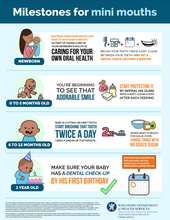
Protect Tiny Teeth, Milestones for Mini-Mouths: Infographic, P-90034a DHS publication, English-Spanish: Information on caring for your baby's mouth from newborn to age 1.
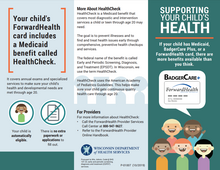
Medicaid HealthCheck Brochure, P-01007 (PDF) DHS publication: Brochure explaining your child's Medicaid benefit called HealthCheck, what it means and how to schedule an appointment.
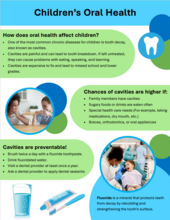
Children's Oral Health, P-44534 (PDF) DHS publication: Fact sheet explaining children's oral health and how parents can help children take care of their oral health.
Get free help to quit commercial tobacco and nicotine
Wisconsin Tobacco Quit Line
Customized plans and coaching
Ages 13+
1-800-Quit-Now
Text "READY" to 34191
Website
Live Vape Free
Text support to quit e-cigarettes
Ages 13-17
Text "VAPEFREE" to 873373
Website
American Indian Quit Line
Culturally tailored coaching
Ages 18+
1-888-7Ai-Quit
Website
First Breath
Support during and after pregnancy
Ages 18+
Website
- First Breath Wisconsin Women's Health Foundation: Wisconsin’s free program to help people make positive changes to their commercial tobacco, alcohol and substance use during pregnancy and beyond.
- Tobacco is Changing DHS: Tobacco is changing, faster than ever. It's tough for parents to recognize it when they see it, and even tougher to talk to kids about the dangers of commercial tobacco use. Use this page to keep up.
- Wisconsin Tobacco Quit Line UW Center for Tobacco Research and Intervention (UW-CTRI): The Wisconsin Tobacco Quit Line is a free service to help people quit smoking, vaping, or other commercial tobacco use. Free 24/7 to any Wisconsin resident who is at least 13 years old. Call 1-800-Quit-Now or Text "READY" to 34191.
- American Indian Quit Line Offers free, culturally tailored support to help indigenous people aged 18+ to quit commercial tobacco— Call 1-888-7Ai-Quit.
- Live Vape Free is a program that provides free support to teens looking to quit e-cigarettes— Text "VAPEFREE" to 873373.
- Live Vape Free Educational Program DHS redirect: Parents, guardians or other adults who want to help a teen in their life quit e-cigarettes can start the Live Vape Free online course and receive tools to help them support the teen in their life through their quit journey. Download and print Live Vape Free- Adult Poster.
- Smoking and Tobacco Use CDC, English-Spanish: Smoking harms nearly every organ of the body, causing many diseases and affecting the health of smokers in general.
Many people have questions about Community Water Fluoridation and Fluoride (DHS). Informed decisions are good decisions.
Explore accurate information and learn more about the mineral fluoride and community water fluoridation.
What are sealants and how do they protect teeth?
- Dental sealants are thin coatings painted on the chewing surfaces of back teeth.
- Sealants keep food and germs away from hard to clean pits and grooves.
- Dental sealants prevent 80% of cavities in the back teeth.
When are dental sealants applied?
Children typically get sealants put on their permanent, back teeth between the ages of six and 12.
How long do dental sealants last?
- Sealants can last up to 10 years.
- They should be checked regularly by a dental professional.
- Dental sealants that are chipped or worn away can be reapplied.
Where can you get sealants?
- Sealants can be applied at dental offices, mobile dental clinics, and schools with dental sealant programs.
- The cost of dental sealants is often covered by insurance, and Wisconsin Seal-A-Smile (SAS) is a school-based program that provides sealants to children at no cost to families.
- On average, 90,000 sealants are placed per year by Wisconsin Seal-A-Smile programs.
- Local SAS programs provide preventive dental care to children in more than 850 schools across Wisconsin. Learn more about the program and sign your child up for services.
Next steps:
- Determine if your child will receive dental sealants from your dental provider or at a school-based sealant program.
- Make your child’s appointment for dental sealants.
- Ensure your children drink fluoridated water, brush their teeth twice a day with a fluoride toothpaste, and get regular dental check-ups.
Resources:
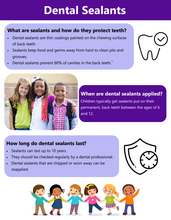
Dental Sealants, P-40110 (PDF)
DHS publication: Fact sheet explaining tooth decay, dental sealants and how a school-based oral health program is helping students in Wisconsin.
Did you know?
Opioids are not necessary for most dental pain, even surgical tooth extraction. Research shows there are safer alternatives to prescribing opioids for relief of oral pain.
- Dose of Reality: Opioids in Wisconsin DHS: Information on Wisconsin's Opioid Epidemic and resources on topics such as prevention, getting help now, data and more.
- Substance Use Disorders DHS: Information on substance use disorders and how to get help.
- First Breath Wisconsin Women's Health Foundation: Wisconsin’s free program to help people make positive changes to their commercial tobacco, alcohol and substance use during pregnancy and beyond.
- Dental Pain Care CDC: Learn about nonopioid therapy and opioid therapy for dental pain. Ask your dentist how to treat your tooth pain without opioids.
What is oral cancer?
- Cancer is when cells in the body begin to grow out of control.
- Oral cancer is found in the mouth and throat, and can affect breathing, talking, eating, chewing, swallowing, and digesting food.
What is oral pre-cancer?
Oral pre-cancer is a tissue change in the mouth that may become cancer. It can appear as white, gray, or red areas in the mouth. This condition should be evaluated by your dentist or medical provider to determine its importance.
Risk factors for oral cancers:
- Commercial tobacco use (smoking tobacco, smokeless tobacco, and possibly vaping)
- Alcohol use
- Human papillomavirus (HPV) infection
- Excess body weight
- Sun exposure or ultraviolet light
- Poor nutrition
Symptoms of oral cancers:
- Red or white patches in mouth
- Sore throat or feeling like something is caught in your throat
- Lumps or irritation in lip, mouth, or throat
- Difficulty chewing, swallowing, or speaking
- Difficulty moving jaw or tongue
- Swelling of jaw
- Numbness of tongue or other areas of the mouth
- Ear pain
If symptoms occur for two or more weeks, please see a dentist or medical provider.
How to prevent oral cancer:
- Avoid commercial tobacco use
- Limit alcohol use
- Maintain a healthy weight and diet
- Limit exposure to the sun or ultraviolet light
- Get vaccinated against HPV
- Visit the dentist regularly for oral cancer screenings
Remember, many oral cancers are preventable.
Other resources
- Head and Neck Cancers National Cancer Institute: Information on head and neck cancers, their causes, symptoms, and treatments.
- Human Papillomavirus (HPV) and Oropharyngeal Cancer CDC, English-Spanish: Information on HPV (Human Papillomavirus) and oropharyngeal cancer.
- Human Papillomavirus (HPV) Vaccine and HPV-Related Cancers DHS: Parents can locate resources and learn about HPV vaccine and how it protects the pre-teens they love from getting future oral and other HPV-related cancers.
- Oral Cancer NIDCR, English: Describes risk factors, signs and symptoms of oral cancer, and the importance of detecting the disease in its early stages.
- Oral Cancer Exam NIDCR: Describes the steps of an oral cancer examination so patients know what to expect.
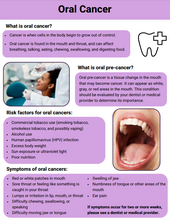
DHS publication: Fact sheet explaining oral cancer, its connection to oral health, symptoms, causes, prevention and Wisconsin facts.
How does pregnancy affect oral health?
During pregnancy, many parts of your body go through physical changes, including your mouth.
- Pregnancy cravings can cause changes in your eating habits, which put you at risk of developing cavities. Snacking can occur more often and consist of sweets, which create the perfect environment for cavities to develop.
- Morning sickness can cause tooth erosion due to stomach acid in the mouth.
What are you at risk from?
- Gingivitis causes the gums to become swollen, red, and bleed easily.
- Tooth erosion happens when acid exposure wears down the tooth’s enamel.
- Dental cavities, also known as dental caries or tooth decay, are caused by the breakdown of the tooth’s enamel by acids.
- Periodontitis occurs when plaque grows below the gum line and irritates the gums. The teeth and gums separate which causes the tissues and bones to break down in the mouth.
Quick tips to improve oral health
- Brush your teeth at least twice per day with a fluoride toothpaste.
- Floss your teeth at least once per day.
- Rinse your mouth with 1 tsp of baking soda mixed in a glass of water after being sick to help with morning sickness.
- Drink fluoridated water. Fluoridated water reduces tooth decay in children and adults by about 25%.
- Make an appointment to see a dentist. Dental visits and dental x-rays are safe during pregnancy.
Oral health matters!
- Poor oral health is linked to preeclampsia, preterm births, and low birth weight.
- Wisconsin ranks 31st in the U.S. for preterm deliveries and 34th for low birth weights.
- Between 2016–2020, 48.9% of mothers in Wisconsin reported receiving a dental cleaning during their pregnancy.
- By visiting your dentist, you and your baby will be protected!
Other resources
- Dental Care During Pregnancy is Safe and Important American Academy of Pediatrics and Children's Dental Health Project publication: Fact sheet explaining the safety and importance of dental care during pregnancy and provides tips on oral care.
- First Breath Wisconsin Women's Health Foundation: Wisconsin’s free program to help people make positive changes to their commercial tobacco, alcohol and substance use during pregnancy and beyond.
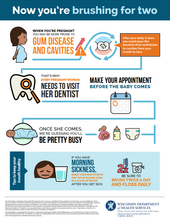
Brushing for Two: Infographic, P-90033a DHS publication, English-Spanish: Fact sheet containing information about caring for a pregnant person's mouth.
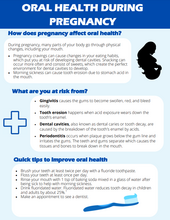
Oral Health During Pregnancy, P-00137 (PDF) DHS publication: Learn how oral health changes during pregnancy, understand why oral health matters, and find tips to keep a pregnant person and their baby healthy.
Provider Guide: Questions Moms are Asking About Oral Health, P-90032 DHS publication, English-Spanish: Trifold brochure answers questions about oral health during pregnancy and caring for an infant's mouth.
Not finding what you need?
Reach out to the Oral Health Program. Contact us and Sign Up for Oral Health Program updates.