


Wisconsin's Site Evaluation Program: Choose Safe Places Child Care Provider Resources
The Choose Safe Places program is managed by Wisconsin’s Site Evaluation Program (SEP) and funded by the Agency for Toxic Substances and Disease Registry’s (ATSDR) Partnership to Promote Local Effort to Reduce Environmental Exposure (APPLETREE).
Wisconsin's Choose Safe Places program connects prospective child care providers to resources for environmental health hazards like drinking water contaminants, lead, and radon to help ensure the places children are cared for are in environmentally safe locations.
Learn how to participate in the Choose Safe Places program

Drinking water

Many people in Wisconsin get their drinking water from private wells. Child care centers should test their drinking water using a certified laboratory for:
- Bacteria—Review our Bacteria in Private Well Water, P-02132 flyer (PDF available in English, Spanish, Hmong).
- Nitrate—Review our Nitrate in Private Well Water, P-02128 flyer (PDF available in English, Spanish, Hmong).
- Arsenic—Review our Arsenic in Private Well Water, P-45012 flyer (PDF available in English, Spanish, Hmong).
Not sure what your private well drinking water test results mean? Use the Be Well Informed tool to get information about health concerns and water treatment options.
If you get your water from a public system, look up or contact your local water utility to review your Consumer Confidence Report. This report describes where your water comes from and what’s in it.
Lead
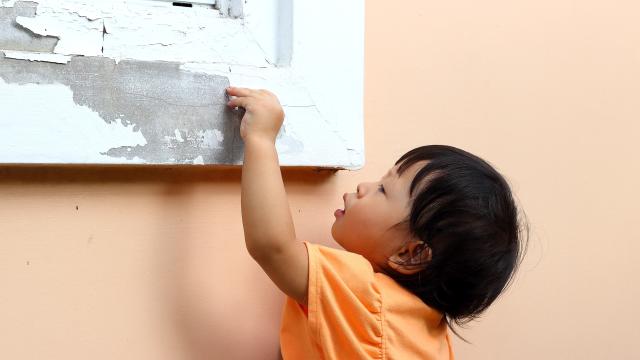
Lead poisoning is caused by several sources. Check out these resource on lead in:
- Paint—Review our Guidance for Child Care Providers Regarding Lead-Based Paint Hazards at Child Care Settings, P-02105 (PDF available in English, Spanish, Hmong).
- Drinking water—Review our Lead in Water webpages and the Wisconsin Department of Natural Resources’ (DNR) Lead in Drinking Water flyer (PDF) to learn more about how you can take action to prevent exposure to lead in drinking water.
- Lead service lines - Use Environmental Protection Agency's Quick Check for Lead to determine if you have lead pipes and review DNR's Best Management Practices if you have a lead service line.
Radon
Radon is the main cause of lung cancer for nonsmokers. Check out these resources on radon:
- Review our Is Your Home Radon Safe? P-01963 (PDF) flyer to help keep your child care center safe.
- Review our Radon Testing for Child Care Providers , P-03638 flyer (PDF available in English, Spanish, Hmong)
- Review our Radon Mitigation for Child Care Providers, P-03638A flyer (PDF available in English, Spanish, Hmong)
- Review our Radon Notification Letter for Parents and Guardians, P-03638B flyer (PDF available in English, Spanish, Hmong)
Are you in Milwaukee?
Milwaukee's Lead-Safe Water Guide (PDF) available in English and Spanish) has information on how to reduce the risk of lead exposure.
Milwaukee's Lead Service Line Replacement Program is available to licensed and certified child care providers. Find out if you have a lead service line using Milwaukee Water Works' interactive lead service line inventory.
Chemical contamination
Past chemical spills can leak into the ground and stay there for many years. These chemical spills can affect the soil, drinking water, and air quality at child care facilities and can make children and staff sick.
Some of these chemicals can turn into vapor, moving through the soil and along or through underground utility lines such as electricity, water, and sewer pipes to nearby buildings. Vapor intrusion happens when these chemical vapors enter buildings through cracks in the foundation or other openings and impact the air you breathe.
Participating in the Choose Safe Places program can help determine if the air, water, or soil in your child care space is being impacted by past chemical spills and connects you with resources to help fix it.
More resources
Lead-in-water testing program
The DHS Lead-in-Water Testing and Remediation Initiative offers licensed group or family child care centers free lead-in-water sampling and plumbing fixes.
Other environmental health concerns
In addition to radon, pollutants that can contaminate indoor air include:
- Carbon monoxide—Carbon monoxide in the air is hard to detect.
- Review our Protecting Your Family from Carbon Monoxide, P-01569 flyer (PDF available in English, Spanish, Hmong) to learn steps you can take to protect children from the harmful gas.
- Mold—Keep areas clean and dry to prevent mold.
- Learn more about mold to help keep you child care center safe.
General environmental health resources
- Learn more about how environmental hazards impact children on our children and the environment webpage.
- Visit our environmental health topics webpage to learn more about air, soil, and water.
- Learn about other indoor health hazards and discover tips to maintaining a healthy home on our healthy homes webpage.
Partner resources
- Children’s Health Alliance of Wisconsin conducts asthma walk-throughs. Learn about the program and how to reduce asthma triggers on the Children’s Health Alliance website.
- Children’s Environmental Health Network has resources on its Eco-Healthy Child Care® site, including an e-learning course on environmental health issues.
Questions? Can't find what you're looking for?
Contact us at dhscsp@dhs.wisconsin.gov