


Blue-Green Algae: Cyanobacterial Harmful Algal Blooms Tips and Resources for Health Professionals

This page includes resources for clinical and public health professionals.
The resources offer information about cyanobacterial harmful agal blooms (cyanoHABs) and related illnesses.
CyanoHAB resources for public health professionals
- Blue-Green Algae (Cyanobacteria) and Cyanotoxin Poisoning Case Reporting and Investigation Protocol (EpiNet), P-02198 (PDF)
- Interstate Technology and Regulatory Council: Strategies for Preventing and Managing Harmful Algal Blooms
- Harmful Algal Blooms Toolkit: A planning guide for public health and emergency response professionals, P-00853 (PDF)
- CDC Veterinarian Reference for Cyanobacterial Blooms (PDF)
- CDC Clinical Overview of Harmful Algal Bloom-Associated Illnesses
- CDC Harmful Algal Blooms and Your Health
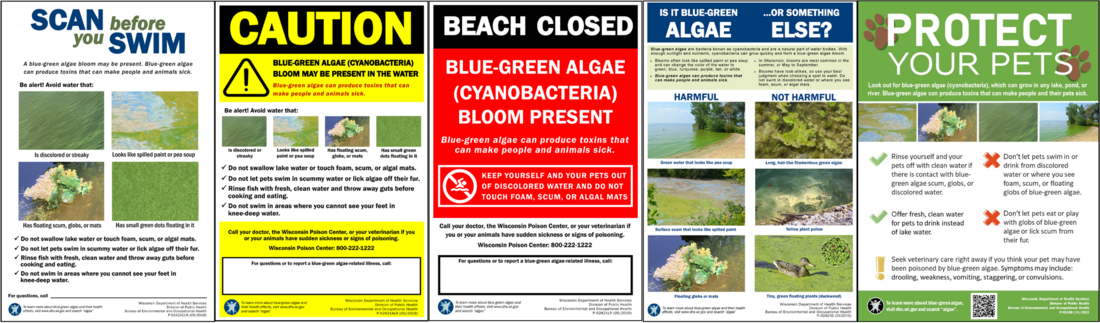
Aluminum signs are available. There are signs about how to scan the water for cyanoHABs before you swim, cautions, closed beaches, protecting pets, and more. Local public health, Tribal nation, and select Department of Natural Resources authorities may purchase them.
Email dhshabs@dhs.wisconsin.gov for order information.
Sign up to receive our HAB Program newsletter. If you’re a public health or environmental health specialist who would like monthly updates, email dhshabs@dhs.wisconsin.gov. We’ll add you to the list.
Select a link to view a past newsletter:
2025
- 2025 Wisconsin HAB Season Summary: Program updates, 2025 HAB season overview, and guidance for local public health officials about the remainder of the HAB season
- March 2025: Don't let Cyanobacteria Spoil Your Summer: HAB program updates, recent HAB activity in Wisconsin, and guidance for local public health officials about preparing for and responding to blooms and related illnesses
- February 2025: Rashes, Upcoming Webinars, and a Bittersweet Goodbye: Everything you need to know about HAB-related rashes, upcoming HAB webinars and trainings, and a goodbye from the Department of Health Services (DHS) HAB program manager.
2024
- December 2024: A Review of the 2024 HAB Season: A summary of the blooms and illnesses reported to the DNR and DHS during 2024, program updates, and a couple of upcoming Save the Dates.
- July HAB Newsletter: The Dog Days of Summer (Literally!): A new HAB and fishing fact sheet, dog data, and local health outreach efforts
- June 2024: HAB Highlights From Across the Country: Highlighting new clinical tests for HAB toxins and cutting edge asthma and aerosol research
- May 2024: Your Guide to the 2024 HAB Season: Your 2023 "quick reference" HAB guide
- January 2024: Habby 2024!: Illness case summaries, highlights from the 2022 HAB season, and new research from the CDC
2023
- October 2023: Protecting Your Pup During Waterfowl Hunting Season: Waterfowl hunting and dog safety during fall blooms
- July 2023: A Summertime HAB Refresher: Cyanotoxins and their effects on human and animal health and a spotlight on local health outreach activities
- May 2023: Your 2023 HAB Guide: Your 2023 "quick reference" HAB guide and highlights from recent program events
CyanoHAB resources for health care professionals
- CDC Clinical Overview of Harmful Algal Bloom-Associated Illnesses
- CDC Clinical Signs and Symptoms of Harmful Algal Bloom-Associated Illnesses
- CDC Clinical Testing and Diagnosis for Illnesses Caused by Harmful Algal Blooms
- CDC Patient Care for Illnesses Caused by Harmful Algal Blooms
CyanoHAB resources for veterinary care professionals
- CDC Veterinarian Reference for Cyanobacterial Blooms (PDF)
- Merck Veterinary Manual—information about cyanotoxin poisoning in animals
Report an illness
Blue-green algae (cyanobacteria) and cyanotoxin poisoning is a reportable condition in Wisconsin. To report any suspected human cases of cyanobacteria and cyanotoxin poisoning, clinicians and public health officials should either:
Report electronically through the Wisconsin Electronic Disease Surveillance System
How to report a suspect case of blue-green algae (cyanobacteria) poisoning
Health care providers should report any suspected human cases of cyanobacteria and cyanotoxin poisoning electronically through WEDSS, or by mailing, or faxing a completed Acute and Communicable Disease Case Report, F-44151 (PDF) to the address on the form.
For help with reporting, call 608-266-1120 or email dhshabs@dhs.wisconsin.gov.