


Lead-Safe Wisconsin: Childhood Lead Poisoning Data
The Childhood Lead Poisoning Prevention Program (CLPPP) tracks and provides updates on childhood blood lead testing and lead poisoning rates.
How do we gather childhood blood lead testing data?
Wisconsin's childhood blood lead testing data is gathered through the Healthy Homes and Lead Poisoning Surveillance System (HHLPSS). HHLPSS tracks:
- Blood lead test results.
- Property addresses associated with blood lead test results.
- Case management activities.
- Lead hazard investigations.
- Lead hazard remediation.
View The Childhood Lead Poisoning Data Explorer Map
The Childhood Lead Poisoning Data Explorer Map shows lead testing and poisoning data for Wisconsin children under age 6. Data is broken out by census tract.
View the Childhood Lead Poisoning Data Explorer Map
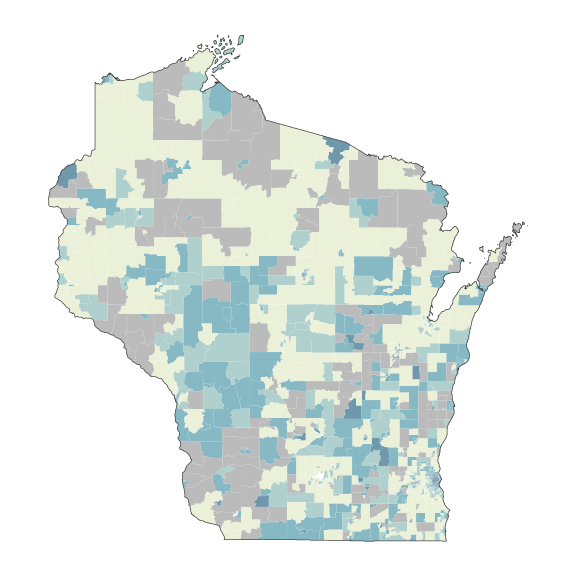
Important note: The data in this application is from 2021, which is before Wisconsin updated its definition of lead poisoning to a blood lead level ≥3.5ug/dL. This application is currently undergoing updates. We appreciate your patience as the data is updated.
Statewide blood lead testing trends
For data visualization, such as graphs, visit the Environmental Public Health Tracking Program (EPHT)'s data dashboard:
Visit EPHT's lead poisoning data dashboard
Number of children tested for lead poisoning (birth to <6 years), 2015 to 2025
Notable information from this table:
- Before 2020, Wisconsin was testing an average of 88k children under age 6 per year.
- There was a drop in lead testing during 2020, when many clinics and resource centers moved to virtual platforms during the COVID-19 pandemic.
- In 2024, testing rates recovered, following an update to Wisconsin's blood lead testing recommendations.
| Year | Number of children tested <6 years |
|---|---|
| 2015 | 86,784 children |
| 2016 | 89,081 children |
| 2017 | 90,486 children |
| 2018 | 88,945 children |
| 2019 | 85,371 children |
| 2020 | 66,684 children |
| 2021 | 66,707 children |
| 2022 | 69,497 children |
| 2023 | 75,359 children |
| 2024 | 100,937 children |
| 2025 | 96,676 children |
Past data
The reports below reference the blood lead level that reflected the CDC’s guidance at the time:
Can't find what you're looking for?
CLPPP works with the Data Resource team to process requests.
Before you submit a request: The information you're looking for may already be available. Please review all available information to make sure you need to submit a request.
When making a data request: Please keep your request short to reduce processing time. There should only be one ask per data request.
Note: CLPPP is unable to share personal information regarding a lead poisoned child or children, including:
- Names.
- Addresses.
- Dates of blood lead sampling.