


Climate and Health: Mental Health
Climate change and its effects like severe weather, heat waves, droughts, and floods can all create high levels of anxiety. As a result, mental health clinicians are seeing more patients come in with symptoms of climate change anxiety—also referred to as eco-anxiety, eco-grief, or climate doom.
Climate anxiety is distress about climate change and its impacts. It can include concerns about safety and well-being, uncertainty about the future, or feelings of hopelessness. Climate anxiety causes many of the same symptoms of generalized anxiety including heart racing and shortness of breath. It also can change the way we act, limiting our ability to do normal tasks and impacting our relationships. Climate anxiety is highly connected with generalized anxiety, and those who already have anxiety may be more impacted by climate concerns.
Simple steps to reduce climate anxiety
- Learn about climate change and its health impacts to anticipate, react, adjust, and recover from climate-related stressors
- Stay informed about weather events in your area
- Prepare for emergencies
- Connect with community support
- Seek professional mental health care
- Make small differences within your control, like building sustainable habits or volunteering
Severe weather events can cause initial impacts like displacement, unstable or unknown housing conditions, lack of access to support services, loss of employment, material items, and basic needs like clothing, legal papers, and devices that make daily life possible. Disaster survivors often also grieve the loss of meaningful possessions that give their lives purpose and meaning.
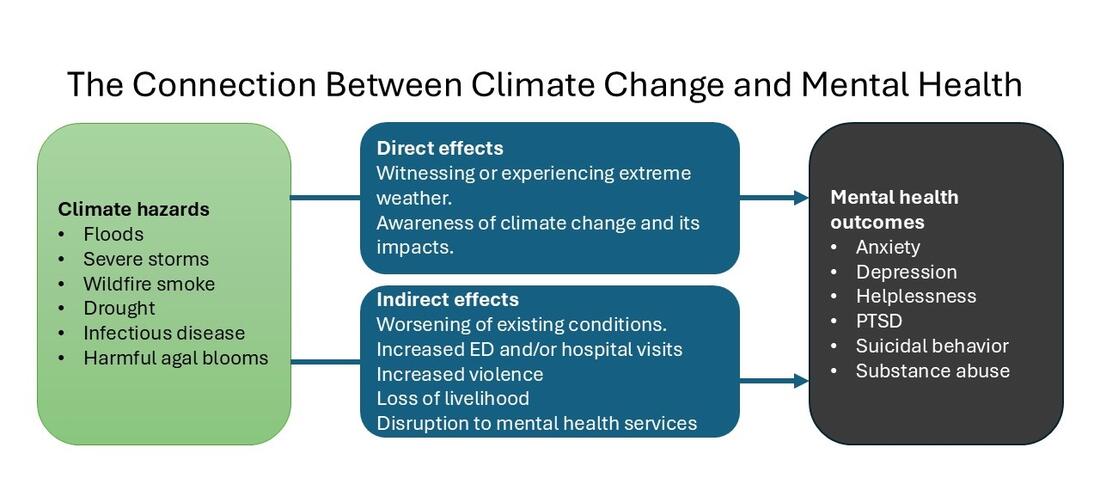
Many people who experience climate change impacts like severe storms, heat waves, and flooding struggle with consequences long after the initial event. Initial impacts can create long-term effects, which can impact mental health outcomes, such as worsening anxiety, depression, feelings of helplessness, suicidal behavior or substance use.
Text description of infographic
The connection between climate change and mental health. Climate hazards: floods, severe storms, wildfire smoke, drought, infectious disease, harmful algal blooms. Direct effects: witnessing or experiencing extreme weather. Awareness of climate change and its impacts. Indirect effects: worsening of existing conditions, increased emergency department and/or hospital visits, increased violence, loss of livelihood, disruption of mental health services. Mental health outcomes: anxiety, depression, helplessness, post-traumatic stress disorder, suicidal behavior, substance abuse.
Extreme weather events and impacts
Many of those impacted by natural disasters or climate change events struggle with a mental health issue following the event. To learn how experiencing a natural disaster or climate change event can impact mental health, select the accordions below.

Rising temperatures and extreme heat impact all of us, but people living with depression and other mental illnesses may experience worse impacts. Some psychiatric medications can increase individuals’ sensitivity to heat or sun, making it difficult for bodies to regulate temperature. Studies also find that suicide rates fluctuate with weather.
Warmer weather may also increase aggression and violence due to the impacts of heat on arousal. Neurotransmitters in the brain that help communication within the body can be disrupted in extreme heat, which can decrease self-regulation and increase hostile thoughts in individuals. Stress and aggression can also put strain on social relationships and even have impacts on physical health, such as memory loss, sleep disorders, immune suppression, and changes in digestion.
Resources
- The fact sheet Protecting Your Family from Extreme Heat, P-02076 provides information about staying safe in an extreme heat event
- Find tips to cope with extreme heat on the Substance Abuse and Mental Health Services Administration website
- Find resources to help respond to heat and mental health on Heat.gov
Communities that experience severe storms and flooding can experience emotional distress in addition to damage to their environment and properties. In areas with repeated flooding, the threat of another storm or flood can cause Post Traumatic Stress Disorder (PTSD)-like symptoms to emerge.
The loss of homes and possessions due to flooding can cause economic hardship, reducing a person or community’s ability meet their basic needs and pay for needed mental health support or health care. These situations can lead people to feelings of despair.
Resources
- Find tips for flood hazards and recovery
- Read Tips for survivors: Coping with grief after a disaster or traumatic event on the Substance Abuse and Mental Health Services Administration website
- The National Child Traumatic Stress Network provides specific flood resources for addressing child trauma before, during and after a flood
- The American Red Cross provides emotional recovery after a disaster
- Find Programs to support your recovery on FEMA.gov

Wisconsin has over 50,000 farms and farming is central to the state’s identity. All farming and agricultural activities are sensitive to weather events. Droughts (and flooding) can impact farmer and farm workers’ livelihoods by causing crop failures, livestock losses, and reduced production. For farm owners, drought can lead to significant financial strain, the threat of losing property, and impact mental health. There is a well-documented shortage of mental health services in rural areas, which makes it harder for farmers and farm workers to get help with these challenges.
Migrant workers can also be significantly impacted by droughts as the lack of water and agricultural production can lead to displacement from their home or work regions. Droughts are a significant driver of climate-caused migration, as people need to move due to the environmental changes.
Resources
- Watch climate and health videos to learn how heat and drought impacts our health
- Learn about drought and your health
- UW Division of Extension provides guidance for Resilient Farms and Families: Responding to Stress
- Find information on Migrant and seasonal farmworker health on the Rural Health Information Hub
- USDA offers programs to help farmers with recover on Farmers.gov
- Find drought information including current conditions from the National Integrated Drought Information System
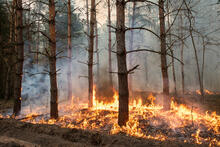
Air pollution is linked to a decrease in cognitive function for both children and adults. Particulate air pollution (PM2.5) is made up of both solid and liquid particles that can be inhaled. They are so small that they can travel into the blood stream where they can cause cell damage in our whole bodies, including our brain. For kids, early exposure to PM2.5 has been shown to be connected to ADHD and autism spectrum disorder. Among adults, air pollution has been shown to increase the risk of dementia. It also increases the risk of depression, suicide, and Parkinson’s disease.
Poor air quality from pollution, or wildfire smoke, can make breathing more difficult, causing stress for people with certain health conditions, limiting daily activity and disrupting routine. Fear of worsening symptoms can limit outdoor movement and further isolate individuals.
Wildfires and wildfire smoke cause more than respiratory issues; they impact mental health, too. Two-thirds of individuals directly exposed to fire experienced trauma similar to PTSD.
Resources
- Watch climate and health videos to learn about how air quality impacts our health
- Wisconsin Wildfire Toolkit, P-00666 (PDF)
- Outdoor Air Quality and Health
- Wildfire Smoke, Wisconsin Department of Natural Resources
- Smoke-Ready Toolbox for Wildfires, EPA
Populations at greater risk

Some communities and groups face more exposure to climate hazards, may be more sensitive to these hazards, and may have less capacity to adapt to climate hazards. A community’s response to a disaster is dependent on how many financial and other resources have been put toward protecting the community—such as preventative flood and fire protections.
The severity of a disaster also depends on the resources available in the community. For example, older adults may lack transportation and may have trouble walking to a cooling center. This makes them especially vulnerable to climate hazards. (For more information about disparities in climate vulnerability, visit the CDC’s Climate and Health Program’s webpage on Climate Adaptation Planning.)
To learn more about communities and groups who are disproportionately affected by climate change and extreme weather, select the accordions below.

Children of all ages may have unique sensitivity to climate related disasters, given their still developing brains, stage of emotional development, and dependence on adults for housing and safety, as well as disaster preparedness and response. Children and teens also have less independence, financial resources, and political power than adults, which can contribute to feelings of helplessness about climate change.
Children and teens from marginalized groups may have more exposure to climate disasters—given the lack of resources and underinvestment in marginalized communities—which puts their mental health at risk.
Compared to previous generations, U.S. children born after 2020 are at increased risk of living through a climate-related disaster, such as a flood or hurricane. Young people are more likely to report anxiety, stress, and being overwhelmed by climate change than any other age group. Climate anxiety stemmed from the perception that their “future is frightening” and that actions to address climate change are inadequate.

Tribal and indigenous communities are often the first communities affected by climate change and the ones who are hit the hardest. Wisconsin is home to 11 federally recognized Tribes and one state-recognized nation. While they are distinct, all of Wisconsin’s Tribes live in close connection with the environment. Many, if not all, of their sacred traditions involve the natural environment.
Climate change-related disasters have led to property damage, food insecurity, and loss of traditions among Tribal communities. In more severely affected areas, indigenous people have had to relocate from land they have occupied for hundreds of generations. Disasters, displacement, and loss of culture can all lead to various mental health issues like post-traumatic stress disorder, depression, isolation, and hopelessness.

Farm workers, ranchers, and other agricultural workers can have greater exposure to climate change impacts as swings from severe drought to severe precipitation continue. This occupational group experiences physically demanding work conditions and often must deal with debt, financial strain, isolation, and poor housing, which impacts their families and their broader community.
These workers also have unique mental health sensitivity to drought. Drought can result in financial hardship and cause unemployment. Farming families and communities may have a strong sense of identity tied to their land, sometimes going back generations, and drought-induced loss of a family farm can create particular distress. Droughts may also contribute to anxiety and depression, as well as higher rates of suicide for agricultural workers.
The Wisconsin Farm Center offers a variety of free services and supports for farmers, including counseling through the 24/7 Farmer Wellness Hotline at 888-901-2558 and vouchers for in-person counseling.
Take action

While the challenge of climate change is daunting, there are many ways to promote mental health and wellbeing. These include actions that build resilience to environmental changes that are occurring today and actions that prevent more drastic effects in the future by addressing the causes of climate change. Select the accordions below for ideas on how to prevent mental health harm.

Support community resilience action planning in your community. Participation in community action planning should include youth and young adults who are most likely to live with the impacts of climate change as well as participants from marginalized groups, especially low-income families, Native residents, and people of color who are most impacted when disasters hit. Engaging in community resiliency planning can help increase your sense of empowerment and hopefulness, which can lower anxiety and depression.
Resilience plans can promote mental health by:
- Providing awareness and education about the mental health risks associated with climate-related disasters.
- Finding ways to establish and maintain access to mental health services.
- Building social support networks, and training first responders and community leaders in mental health first aid.
Resilience plans can also foster economic stability, protect the environment, and encourage physical health, all of which can safeguard mental health.
For more information about climate resilience plans and to learn if your community has one, visit the Climate Adaptation Knowledge Exchange.

Green spaces, such as parks, gardens, and forests, can support coping with stress and can improve mental health and well-being. Benefits to spending time in green spaces, whether in urban or rural settings, may include decreased stress and anxiety and increased opportunities for physical activity. Green spaces can also reduce temperatures in urban heat islands or areas in cities where it is significantly hotter due to human activity, close buildings, and minimal trees or landscape.
Green spaces tend to be situated in wealthier urban communities. Lower wealth neighborhoods, which may also have lesser access to mental health care, may particularly benefit from green space investments, when implemented with community action.

Most Americans believe that climate change is occurring and are worried about it. Two-thirds of Americans feel a personal sense of responsibility to help reduce climate change. About one third of Americans would be willing to engage in community efforts to limit global warming.
People can engage in resilience-focused climate actions, transforming their concerns into positive actions. These include behavior changes, as well as working with others for community benefit. For example, volunteering with a community organization to restore an ecosystem or volunteering at a community farm can be done with community members with similar interests and concerns.
Joining others in collective action may offer more mental health benefits than individual efforts. Group efforts may reduce loneliness and social isolation. Youth and young adult participation may promote positive risk-taking behavior, increase resilience and optimism, and reduce negative moods. Engaging in collective action may empower people to feel more in control of their future and increase feelings of hope.

Across Wisconsin, local coalitions work from the grassroots up to help enact policies that protect communities from the health effects of climate change. Local efforts are important and build momentum for statewide change, but without comprehensive statewide policies, too many of our neighbors get left out. That’s why it is important to support comprehensive statewide policies that help every Wisconsinite live a healthy, climate resilient life.
- Support investing in clean energy like solar and wind.
- Support renewable energy standards such utility companies generating more power from renewable sources.
- Advocate for nature-based solutions such as regenerative agriculture and urban green space.
- Support waste reduction.
- Advocate for local climate action plans.
Resources
- Visit the Good Grief Network to learn ways to build emotional resilience.
- Read the Mental Health and our Changing Climate (PDF) from the American Psychological Association.
- Find Tips for health care practitioners and responders: Helping survivors cope with grief after a disaster or traumatic event from the Substance Abuse and Mental Health Services Administration.
- Read a quick guide for parents and caregivers on Responding to Youth Emotional Distress due to Climate Change: A Guide for Parents and Caregivers (PDF)
- The Climate Mental Health Network provides guidance for parents and caregivers to help parents navigate the emotional impacts of extreme weather
- The Child Mind Institute provides information on how to support kids with climate anxiety
- Find lessons and activities for students on the Subject to Climate Wisconsin Education Hub
- The Climate Emotions Wheel helps teachers and students identify what they are feeling
- Climate Mental Health Network provides K-12 Education on their website.
The 988 Suicide & Crisis Lifeline provides free and confidential support for anyone experiencing a suicidal, mental health, and/or substance use crisis. More information on how to call, text or chat with 988 can be found on the 988 Suicide and Crisis Lifeline page.