


Small Talks: Partner Materials
Help caring adults throughout Wisconsin understand the importance of talking with kids about the impacts of substance use early and often. Use these Small Talks campaign materials in your community.
Need help implementing the Small Talks campaign in your community? Contact us at DHSDCTSSMALLTALKS@dhs.wisconsin.gov.
Advertising
Promote the Small Talks campaign through outdoor advertising with one of these billboard designs.
Version 1 (available in English and Spanish)

Version 2 (available in English and Spanish)

Version 3 (Tribal nations)

Send an email to DHSDCTSSMALLTALKS@dhs.wisconsin.gov for the files for these billboard designs.
Promote the Small Talks campaign through advertising on apps and websites. Use these digital display files.
Download all images in sets 1-5 (ZIP file)
Set 1
This set is available in the following sizes: 960x1200, 1000x1500, 1200x628, and 1200x1200.

Set 2
This set is available in the following sizes: 960x1200, 1000x1500, 1200x628, and 1200x1200.

Set 3
This set is available in the following sizes: 960x1200, 1000x1500, 1200x628, and 1200x1200.

Set 4
This set is available in the following sizes: 960x1200, 1000x1500, 1200x628, and 1200x1200.

Set 5
This set is available in the following sizes: 960x1200, 1000x1500, 1200x628, and 1200x1200.

Set 6 (Tribal nation audiences)
This set includes four designs with each design in the following sizes:
160x600
728x90
250x250
Download all images in the Tribal nation audiences set (ZIP file)

Promote the Small Talks campaign on radio stations with these live read public service announcements.
Help us track the reach of the Small Talks campaign! Send an email to DHSDCTSSMALLTALKS@dhs.wisconsin.gov if you broadcast any of these scripts.
:30 peer pressure practice
You wish you could. But you can’t prevent a child from being offered alcohol and other drugs. However, you can help them practice saying “no.” Brainstorm with a kid on things to say, like “no, thanks, I have a big day tomorrow,” or “It’s okay, I want to keep a clear head.” Then practice it with a little role play. Get more tips that help prevent youth substance use at Small-Talks-W-I-dot-org. Sponsored by the Wisconsin Department of Health Services and [local organization name].
:15 peer pressure practice
You can’t prevent a child from being offered alcohol or other drugs. But you can help them practice how to say “No” — with a little role play. Get more tips at Small-Talks-W-I-dot-org. Sponsored by the Wisconsin Department of Health Services and [local organization name].
:15 the right time
When is the best time to start having small talks with kids about alcohol and other drugs? Around age eight, when they start forming their first opinions about substance use. Get talk tips, facts, and more at Small-Talks-W-I-dot-org.
:15 home run
*This version is perfect for public address announcements at Little League games or other baseball/softball events.*
We're teaming up with our friends at the Wisconsin Department of Health Services to remind parents that short, casual conversations with kids about alcohol and other drugs are always a home run. They can happen anywhere and anytime! Get talk tips, facts, and more at Small-Talks-W-I-dot-org.
:15 strike up a talk
*This version is perfect for public address announcements at Little League games or other baseball/softball events.*
Hey, parents. Striiiiiike up a conversation with your kids about alcohol and other drugs. Short, casual talks are a big win in helping to prevent substance use. Get talk tips, facts, and more at Small-Talks-W-I-dot-org.
:30 cancer risk (alcohol focused)
I just found out that the more alcohol a person drinks and the earlier in life they start, the higher their risk for at least seven different types of cancer can climb! That’s real. And it’s inspiring me to talk to the kids in my life about the link between alcohol use and cancer. Having short, casual conversations with children about alcohol and its connection to cancer, starting around age 8, can make a big difference. And it’s easier than you think! For tips on how you can get started, visit Small-Talks-W-I-dot-org.
Promote the Small Talks campaign through commercials/PSAs on radio stations and streaming audio services. Two :30 produced spots are available.
Download the files for the Small Talks campaign radio commercials/PSAs (ZIP file)
Help us track the reach of the Small Talks campaign! Send an email to DHSDCTSSMALLTALKS@dhs.wisconsin.gov if you broadcast any of these commercials/PSAs.
Promote the Small Talks campaign using paid advertising on YouTube and other streaming video platforms with these pause and pre-roll/bumper videos.
Download a ZIP file with CTV pause ads and skins
Download a ZIP file with the :06 and :10 videos
:06 video
Let that fear go: Let that fear go-YouTube
:10 videos
- Instill confidence: Instill confidence-YouTube
- Learning opportunities: Learning opportunities-YouTube
- Provide guidance: Provide guidance-YouTube
Help us track the reach of the Small Talks campaign! Send an email to DHSDCTSSMALLTALKS@dhs.wisconsin.gov if you use any of these videos.
Community and public relations
We encourage you to use the Small Talks campaign logo on materials you create promoting this initiative.
When using the Small Talks logo on websites and social media, always include a link to the campaign website (dhs.wisconsin.gov/small-talks) Additionally, the logo can serve as a hyperlink to the campaign website.
Leave space around the logo when placing it on materials you create.
Do alter the logo in any way, including separating the elements or distorting its dimensions.
Download the colored stacked logo | Download the horizontal colored logo


White logo: Download the stacked white logo | Download the horizontal white logo
Promote the Small Talks campaign in church bulletins, employee/company newsletters, organization newsletters, school newsletters, and/or through email blasts. Use one of the following drop-in articles:
Small talks: how Wisconsin prevents youth substance use
Substance use can do lasting damage to a kid’s growing brain, impacting everything from how they learn and make decisions to how they handle emotions. But you don’t need a big speech to help a kid understand the impacts of substance use. Start small instead. Having a lot of small, casual talks—at the store, in the drive-thru, or between video games—can make a big difference in a kid’s health. Start around age 8 to help kids make healthy decisions during this important time of their lives. Visit SmallTalksWi.org for talk tips, facts, and more. This campaign is sponsored by the Wisconsin Department of Health Services.
Learn how to talk with kids about substance use
Did you know that research shows that parents and caring adults are the most powerful influence on choices kids make about substance use? And you don’t need a big speech to help a kid understand the impacts of substance use. Start small instead. Having a lot of small, casual talks—at the store, in the drive-thru, or between video games—can make a big difference in a kid’s health. Start around age 8 to help kids make healthy decisions during this important time of their lives. Relax. Talk. Listen. Repeat. Visit SmallTalksWi.org for talk tips, facts, and more. This campaign is sponsored by the Wisconsin Department of Health Services.
Help kids grow up substance-free: have small talks
Small talks about substance use can make a big difference in a kid’s choices. That’s because kids really do listen — and anyone can play a part in helping kids make better choices for their health. Having frequent, casual conversations about substance use, starting around age 8, can be a lot more effective—and a lot less intimidating—than one super-serious discussion. So, start talking. Keep listening. Help give a kid the confidence to grow up substance-free. Visit SmallTalksWi.org for talk tips, facts, and more. This campaign is sponsored by the Wisconsin Department of Health Services.
Now is a great time to talk with youth about substance use
Research shows that having frequent, casual conversations about the impacts of substance use can make a big difference in a kid’s choices. However, once these small talks get started, you may get hit with some tough questions, like, “If substance use is so bad, why do you drink beer?” But you’ve got help to be ready for these tough moments. [INSERT NAME OF YOUR ORGANIZATION] is partnering with the Wisconsin Department of Health Services to give you tips, tools and ways to answer tough questions like, “Did you use substances when you were a kid?” and “What if my friends ask me to try something I don’t want to?” and “If alcohol or drugs are bad, why do people we know use them?” These new resources are part of Small Talks, a campaign from the Wisconsin Department of Health Services, which encourages adults to have frequent, casual conversations about substance use with kids starting at age 8. To access these resources, go to the Small Talks website at SmallTalksWi.org. Then, use the tips and information to spark small talks with the kids in your life, and share the resources with parents and other caring adults in your community.
Because you care about kids, you care about underage substance use
Helping kids understand the impacts of substance use isn’t just possible—it’s happening right now, in small ways all over the state. Small Talks is an underage substance use campaign from the Wisconsin Department of Health Services. It encourages parents and other caring adults to have frequent, casual conversations with kids, starting around age 8, about the impacts of substance use. The facts are important: substance use can damage the part of the brain responsible for learning, lead to mental struggles, and affect long-term health such as increasing the risk for many types of cancer. Research shows that these non-judgmental small talks can be a lot more effective—and a lot less intimidating—than one super-serious discussion. What can you do?
- Go to SmallTalksWI.org for the latest Wisconsin underage substance use facts, talk tips, and more.
- Use the information from SmallTalksWI.org to have small talks with the kids in your life.
- Sign up to receive the quarterly Small Talks email newsletter at SmallTalksWI.org.
- Share Small Talks campaign resources with parents and other caring adults in your community.
- Promote the Small Talks campaign on your social media channels. Tag all posts with #SmallTalksWI.
New partnership links underage drinking and cancer, helps parents talk to kids
We’re excited to announce that [YOUR ORGANIZATION] is partnering with the Wisconsin Cancer Collaborative and the Wisconsin Department of Health Services’ Small Talks youth substance use prevention campaign to raise awareness about alcohol and its associated cancer risk. Together, our aim is to prevent underage drinking and reduce the burden of cancer in our communities.
Only 30% of adults are aware that alcohol increases the risk for at least seven types of cancer: mouth, throat, voice box, esophagus, liver, colorectal, and breast cancer. The more alcohol a person drinks and the earlier in life they start, the higher their cancer risk. That’s one of the many reasons it’s critical to prevent underage drinking.
Want to take action in your community? Taking small steps, like avoiding excessive drinking, offering guests nonalcoholic options when you host, and modeling responsible alcohol-related behaviors for kids at home can help.
Research shows that having short, casual conversations with kids about the dangers of alcohol, starting around age 8, can make a big difference in a child’s choices. Help protect Wisconsin’s kids and reduce the burden of cancer on our communities. Visit SmallTalksWI.org for take action tips and to learn more about the link between cancer and alcohol. Then, share your small talks moments on social media using #SmallTalksWI.
Protect our shared story: small talks help prevent youth substance use
(Tribal nation audiences)
Parents, caregivers, elders, and community leaders—our influence is more powerful than you think. And we all play a role in protecting our children from the impacts of substance use. Start with small talks. These short, casual conversations about alcohol and other drugs can make a big impact on kids’ choices. It starts with you! So, get talking. Keep listening. And let’s give our kids the confidence to grow up substance-free. Visit SmallTalksWI.org for talk tips, facts, and more. This campaign is sponsored by the Wisconsin Department of Health Services.
Help us track the reach of the Small Talks campaign! Send an email to DHSDCTSSMALLTALKS@dhs.wisconsin.gov if you use any of these drop-in articles.
Promote the Small Talks campaign in your community by hosting an event or training.
Our Small Talks campaign slide deck can be used at:
- Parent teacher association meetings.
- School trainings.
- School family nights.
- Faith-based organizations.
- Family resource centers.
- Youth community groups.
- Law enforcement agencies.
- Neighborhood parent gatherings.
Download the Small Talks slide deck (PowerPoint file)
NOTE: Insert your organization's logo in the spots indicated or delete the placeholder box for this information on the first and last slides.
Help us track the reach of the Small Talks campaign! Send an email to DHSDCTSSMALLTALKS@dhs.wisconsin.gov if you use this slide deck.
Need to talk about the Small Talks campaign in your community? Use these talking points.
- Because you care about children, you care about youth substance use.
- Childhood is a critical period of physical and emotional growth.
- Youth substance use exposes a child’s developing brain, mental health, and life to serious damage.
- Research supports the effectiveness of conversations between children and trusted adults about challenging topics, such as substance use.
- Small Talks is a statewide campaign encouraging adults – especially parents and caregivers – to have short, casual conversations about the impacts of substance use with the children in their lives starting at age eight.
- Prevention experts recommend beginning substance use education at age eight. This is the age at which children start to form their earliest opinions about substance use
- Small talks do not require much planning: Just choose the moment that feels right to you. Small talks can happen while watching a TV show, over homework, while playing video games, at the store, while listening music, and while scanning social media. Help a child sort out what they hear from friends or see on TV before someone asks them to use substances.
- There is no right or wrong way to have a small talk. Having a lot of talks (even do-overs) is the point. Every attempt shows you care and are paying attention.
- Visit SmallTalksWI.org for youth substance use facts, talk tips, and more.
- This campaign is sponsored by the Wisconsin Department of Health Services.
Publications
Promote the key messages of the Small Talks campaign by sharing these handouts. Each handout measures 8.5 inches by 11 inches. You can print them on a home or office printer.
Send an email to DHSDCTSSMALLTALKS@dhs.wisconsin.gov if you need versions with crop marks for professional printing.

How to Have a Successful Small Talk - English (PDF)
How to Have a Successful Small Talk - Spanish (PDF)

Alcohol, Kids, and Cancer: Making the Connection (PDF)
This item is not available in Spanish.

All Role Models Can Make a Difference - English (PDF)
All Role Models Can Make a Difference - Spanish (PDF)

All Role Models Can Make a Difference - Tribal Nations (PDF)
Help us track the reach of the Small Talks campaign! Send an email to DHSDCTSSMALLTALKS@dhs.wisconsin.gov if you use these handouts.
Promote the Small Talks campaign by displaying and distributing these posters in your community. These posters measure 8.5 inches by 11 inches. You can print these posters on a home or office printer.
Send an email to DHSDCTSSMALLTALKS@dhs.wisconsin.gov if you need versions with crop marks for professional printing.




Help us track the reach of the Small Talks campaign! Send an email to DHSDCTSSMALLTALKS@dhs.wisconsin.gov if you use these posters.
Signage
Promote the Small Talks campaign by displaying a vinyl banner. One design is available in English and Spanish.
Send an email to DHSDCTSSMALLTALKS@dhs.wisconsin.gov if you want a copy of the artwork to print this item.

Promote the Small Talks campaign by placing a sign in the yard of a business, home, office, and/or school. This sign is 18 inches wide and 24 inches tall. One design is available in English and Spanish.
Send an email to DHSDCTSSMALLTALKSdhs.wisconsin.gov if you want a copy of the artwork to print this item.

Social media graphics and posts
This image will work best on Facebook and LinkedIn. Send a message to DHSDCTSSMALLTALKS@
Instructions
- Download/save the image to your device.
- Upload the image to your account.
- Use the text below the image to complete the post.
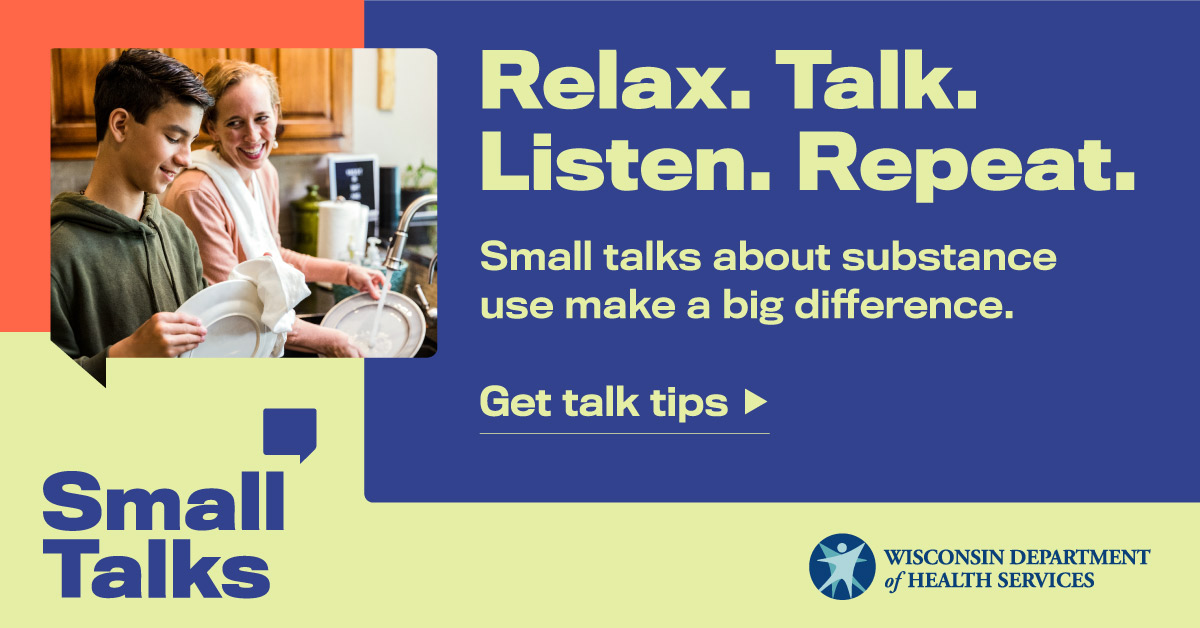

It’s easier than you think to get a kid talking about difficult topics. Get talk tips and more at https://www.dhs.wisconsin.gov/small-talks/index.htm #SmallTalksWI
This social post is available in Spanish. Download a ZIP file with the Spanish general image and text.
These images will work best on Facebook and LinkedIn. Send a message to DHSDCTSSMALLTALKS@
Instructions
- Download/save the image to your device.
- Upload the image to your account.
- Use the text below the image to complete the post.
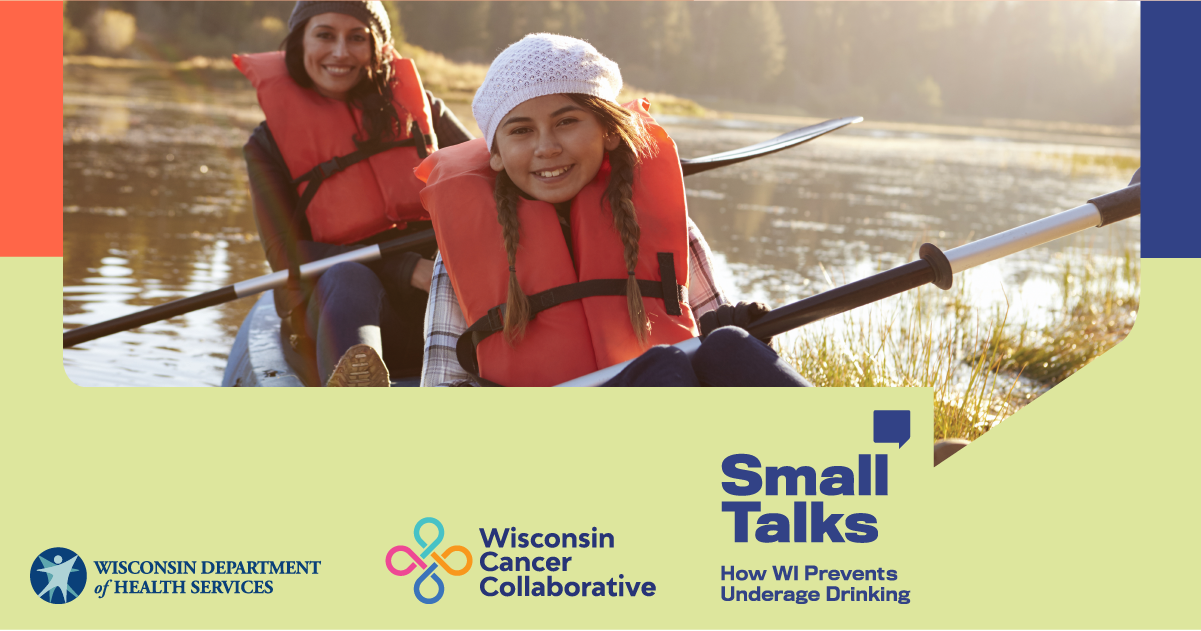
Alcohol increases the risk for mouth, throat, voice box, esophagus, liver, colorectal, and breast cancer. That’s seven more reasons to talk with your kids about the impacts of underage drinking. Need help getting started? Go to https://www.dhs.wisconsin.gov/small-talks/index.htm for tips and more. #SmallTalksWI
-
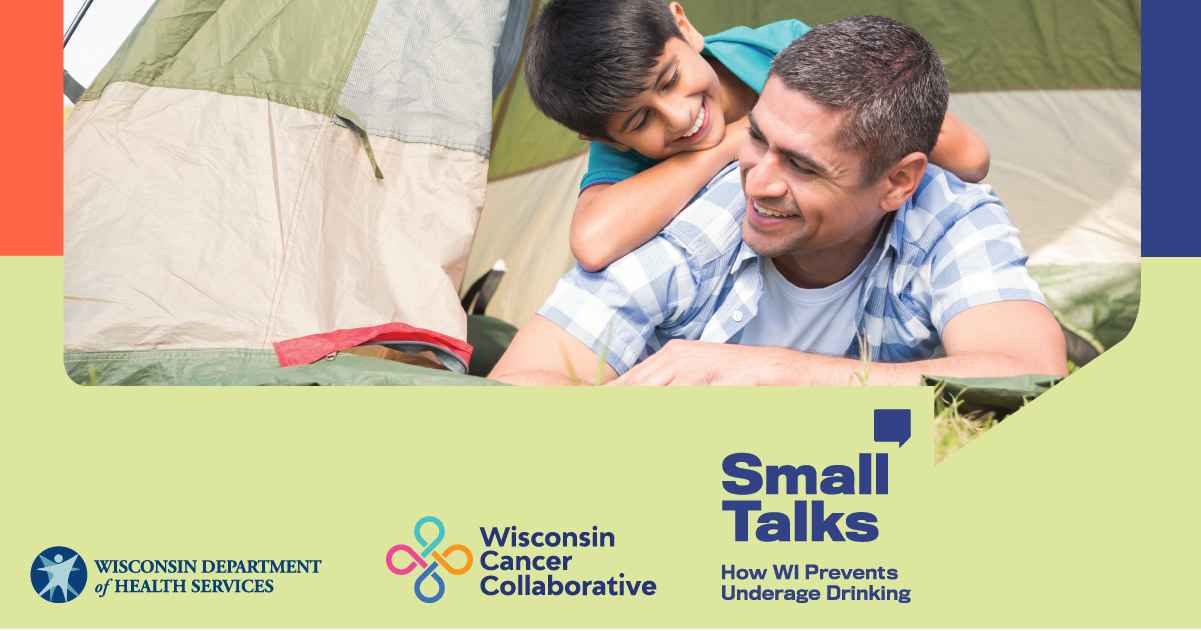
Did you know that the more alcohol a person drinks and the earlier in life they start, the higher their risk of cancer? It’s true—and it makes having short, casual talks with kids about the impacts of alcohol even more important. It really works. Get small talk tips and more at https://www.dhs.wisconsin.gov/small-talks/index.htm #SmallTalksWI
-
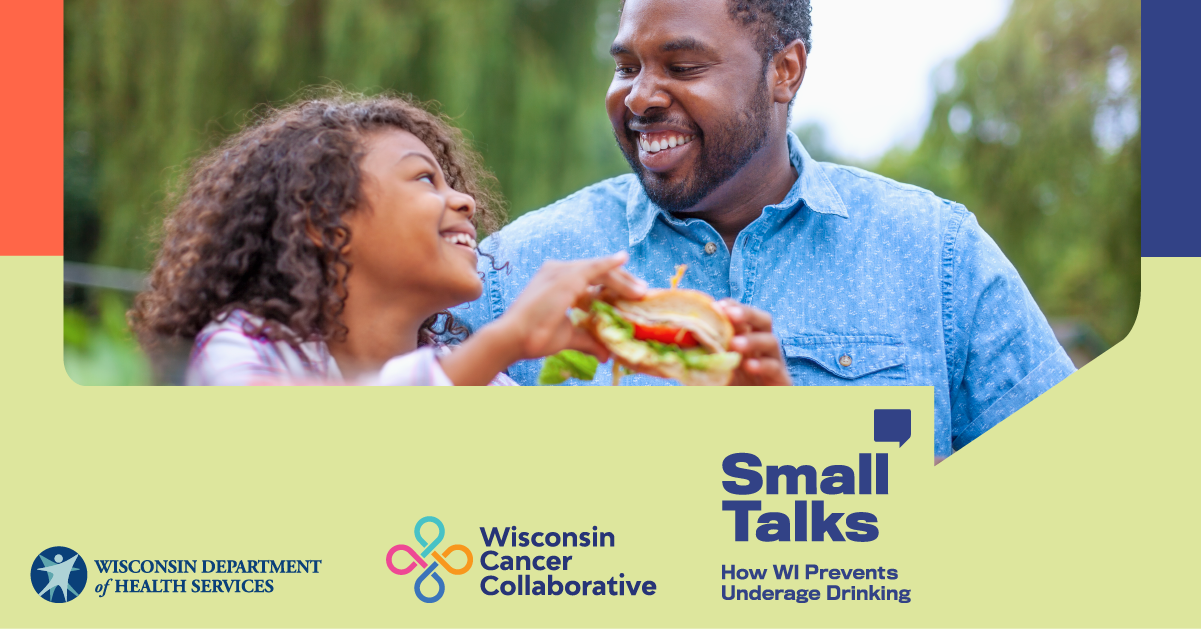
Short, casual talks about the impacts of underage drinking can make a big difference. That’s because kids really do listen. Research shows that starting around age eight can help kids make positive choices—and reduce their risk for cancer. Learn more and get tips at https://www.dhs.wisconsin.gov/small-talks/index.htm #SmallTalksWI
-
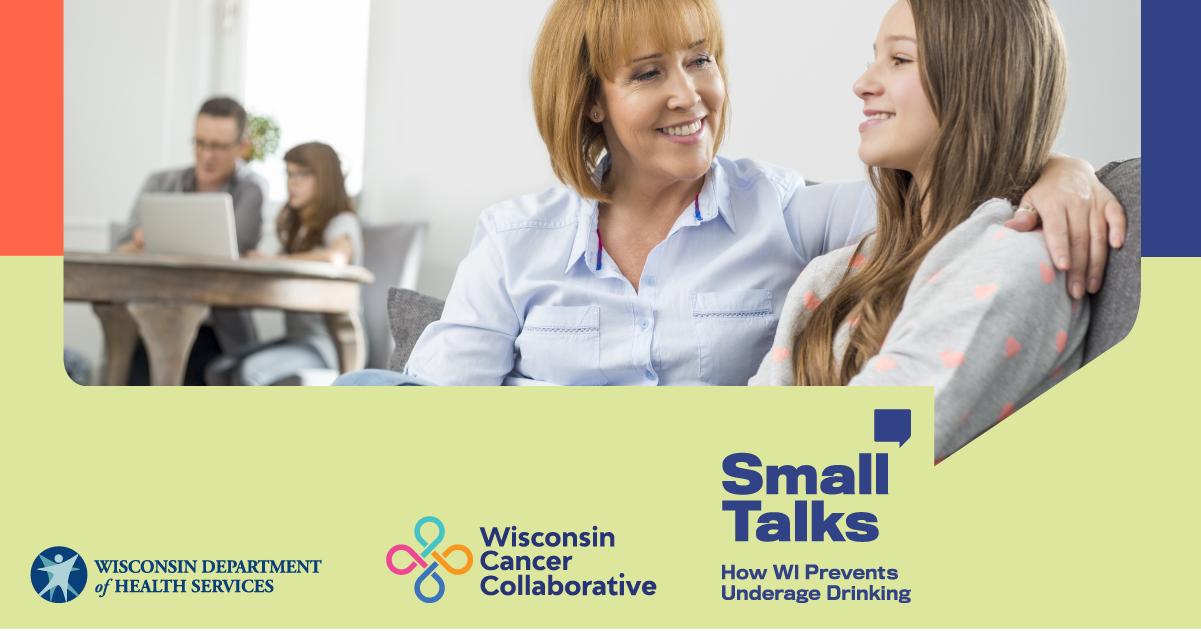
Want to prevent underage drinking and help kids lower their risk for alcohol-related cancers? Have small talks. Get tips to start talking and more at https://www.dhs.wisconsin.gov/small-talks/index.htm #SmallTalksWI
These images will work best on Facebook and LinkedIn. Send a message to DHSDCTSSMALLTALKS@
Instructions
- Download/save the image to your device.
- Upload the image to your account.
- Use the text below the image to complete the post.
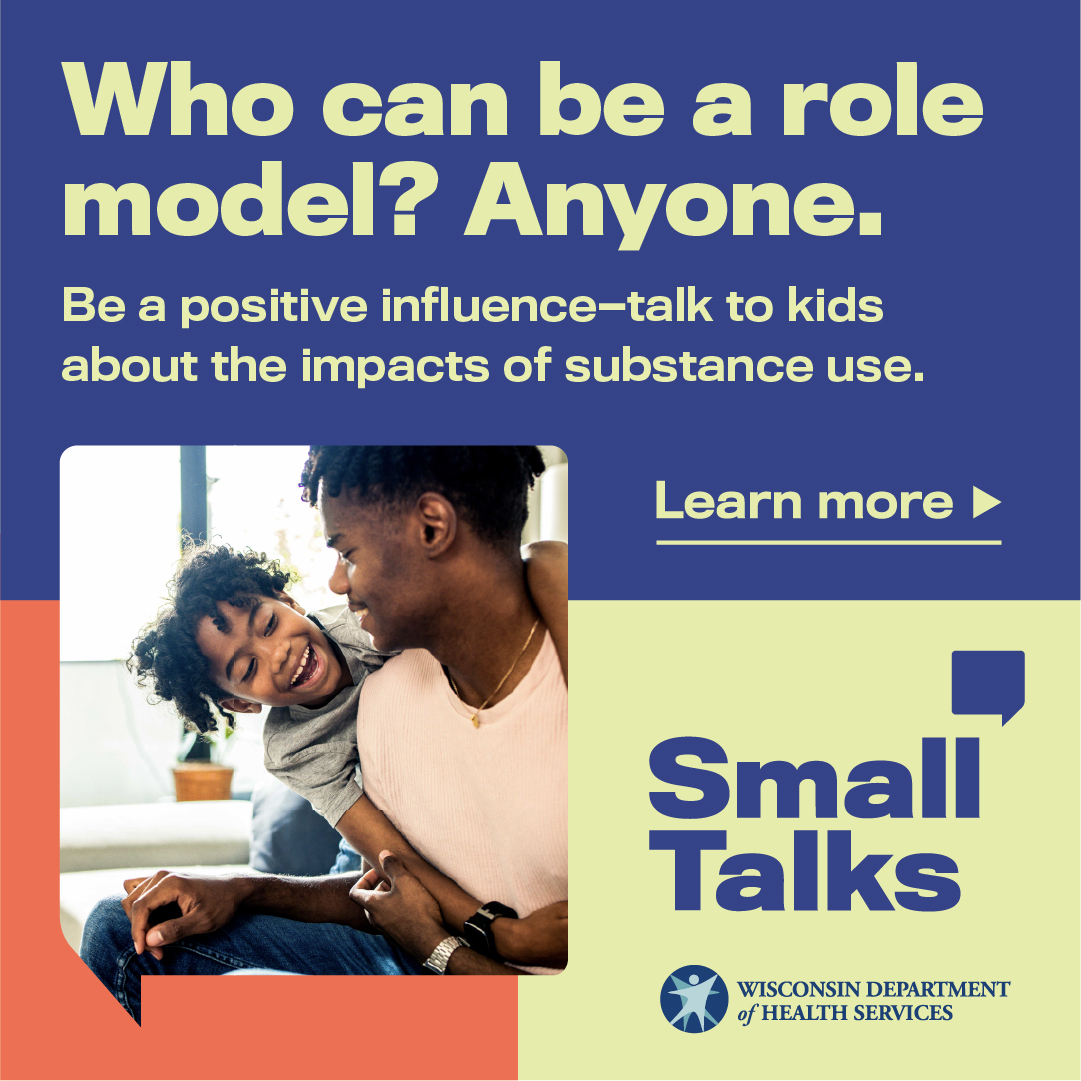

Anyone in our community can be a role model. Be a positive influence: talk to kids about the impacts of substance use. Get talk tips and more at https://www.dhs.wisconsin.gov/small-talks/index.htm #SmallTalksWI
-
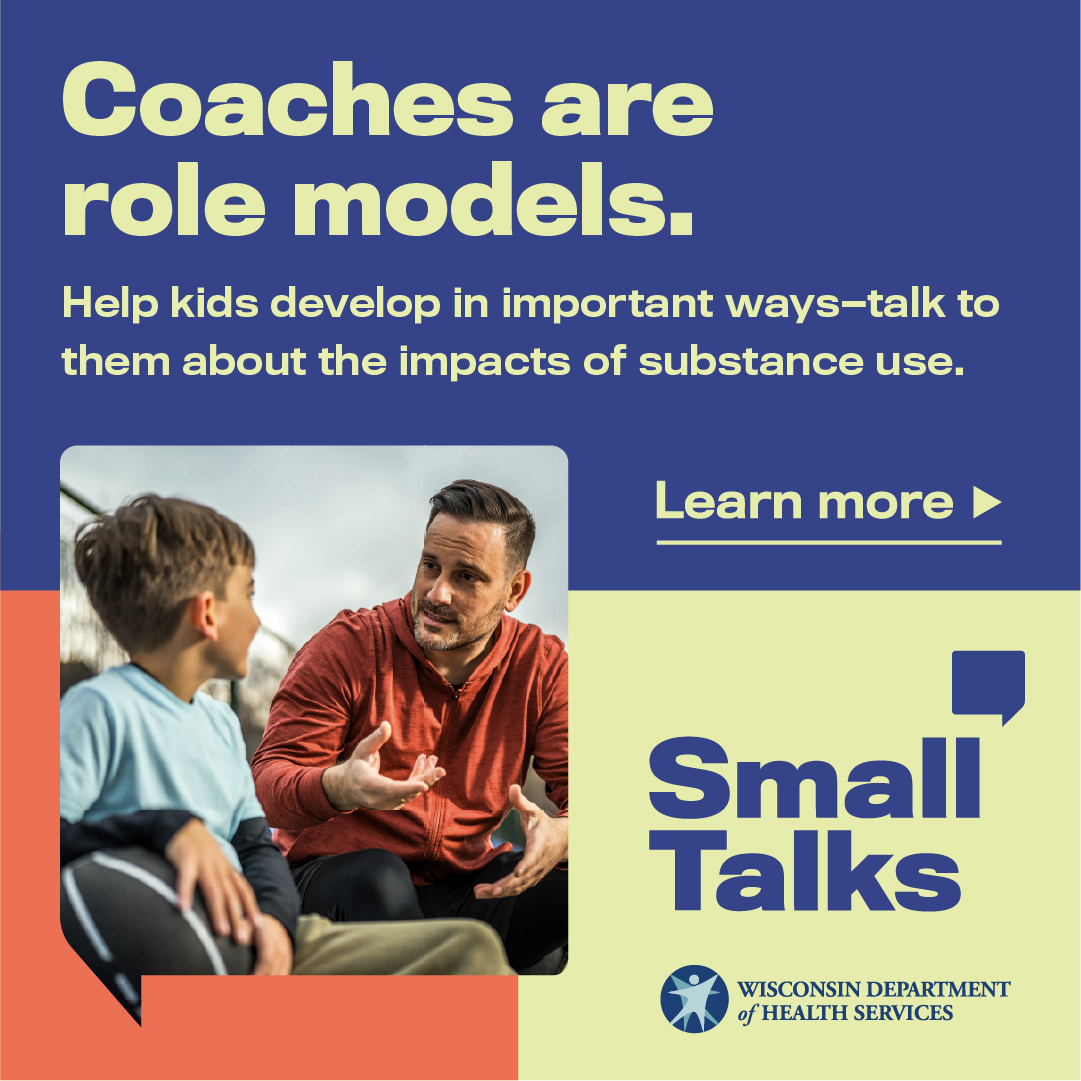

Anyone in our community can be a role model. Be a positive influence: talk to kids about the impacts of substance use. Get talk tips and more at https://www.dhs.wisconsin.gov/small-talks/index.htm #SmallTalksWI
-
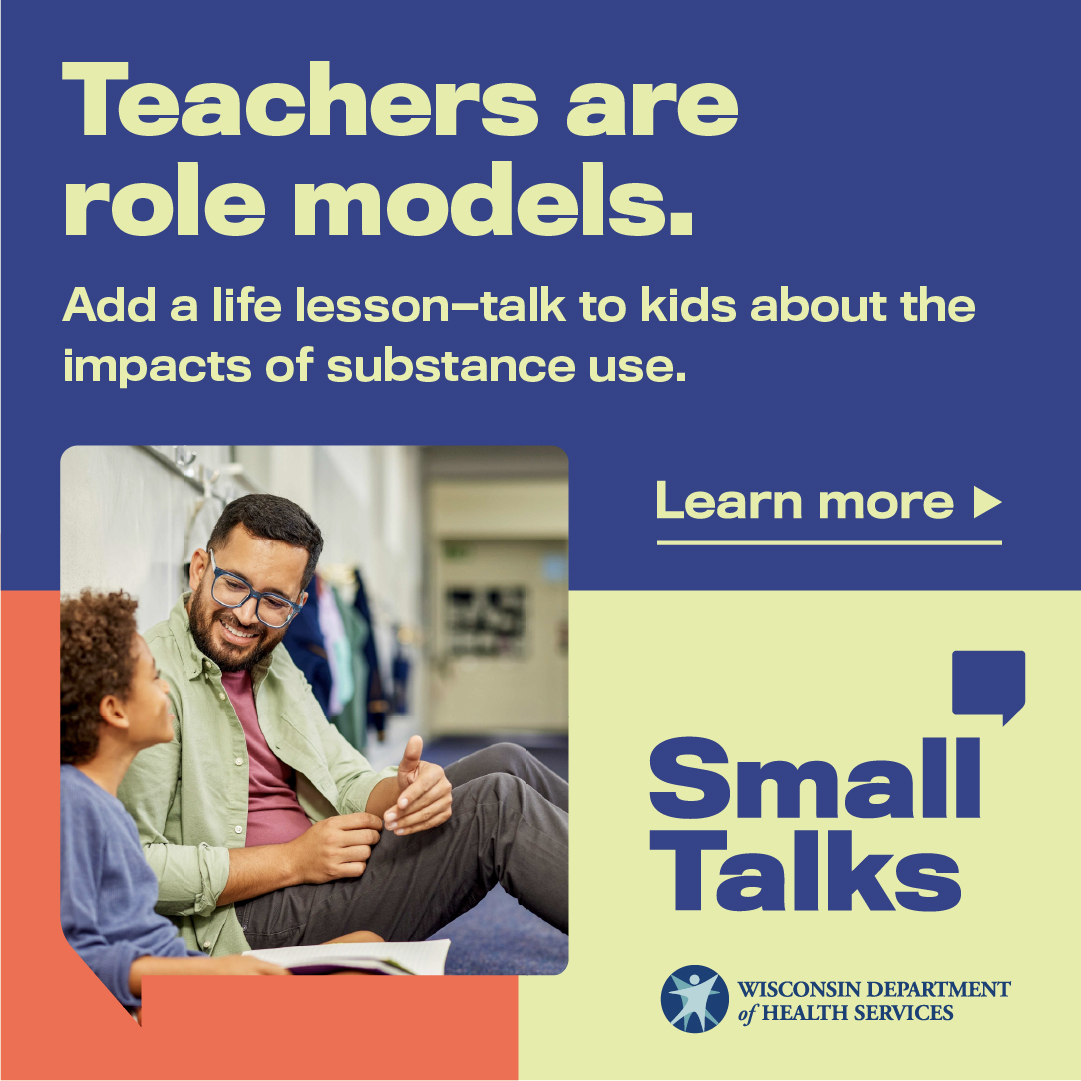

Anyone in our community can be a role model. Be a positive influence: talk to kids about the impacts of substance use. Get talk tips and more at https://www.dhs.wisconsin.gov/small-talks/index.htm #SmallTalksWI
-
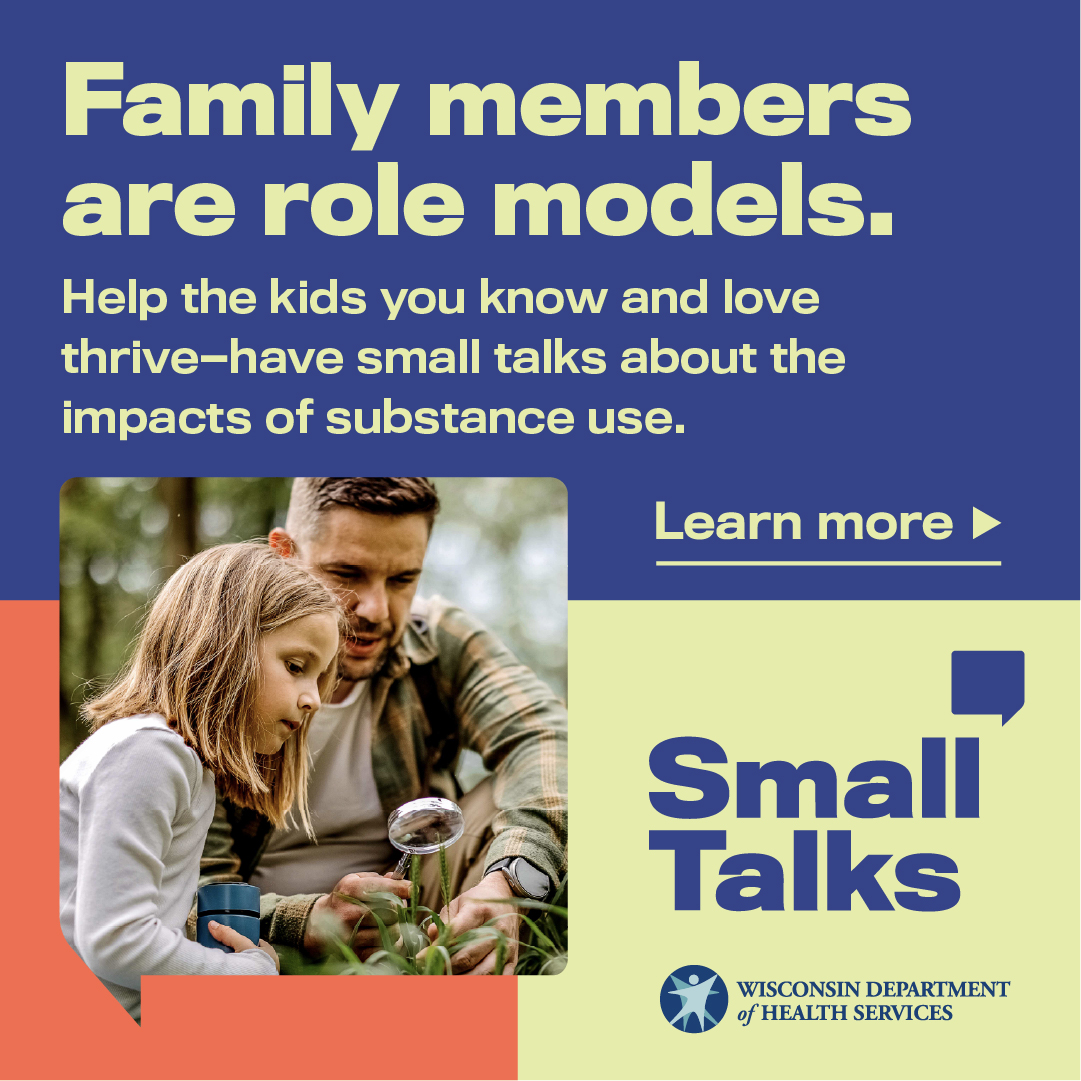

Help the kids you know and love thrive—have small talks about the impacts of substance use. Get talk tips and more at https://www.dhs.wisconsin.gov/small-talks/index.htm #SmallTalksWI
These social media posts are available in Spanish. Download a ZIP file with the Spanish role model images and text.
These images will work best on Facebook and LinkedIn. Send a message to DHSDCTSSMALLTALKS@
Instructions
- Download/save the image to your device.
- Upload the image to your account.
- Use the text below the image to complete the post.
(Download keep it casual image)
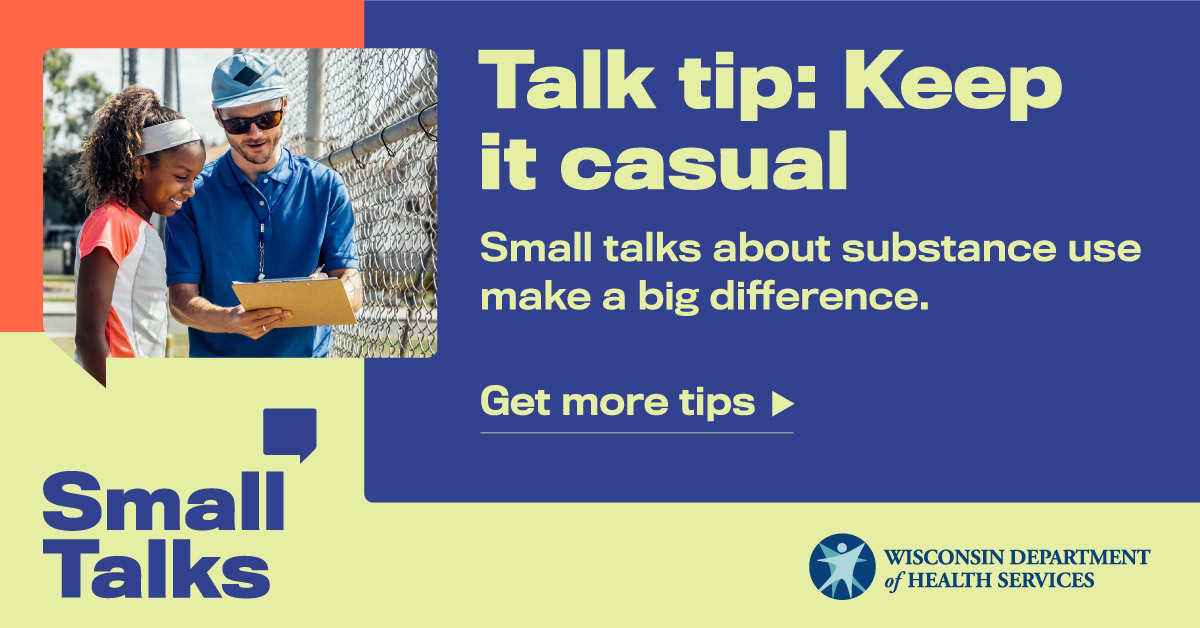

Short conversations help you connect with kids about the important stuff. And it doesn’t have to be a big, formal talk to make an impact — in fact, lots of small talks build trust: https://www.dhs.wisconsin.gov/small-talks/index.htm #SmallTalksWI
-
(Download talk about the tough stuff image)
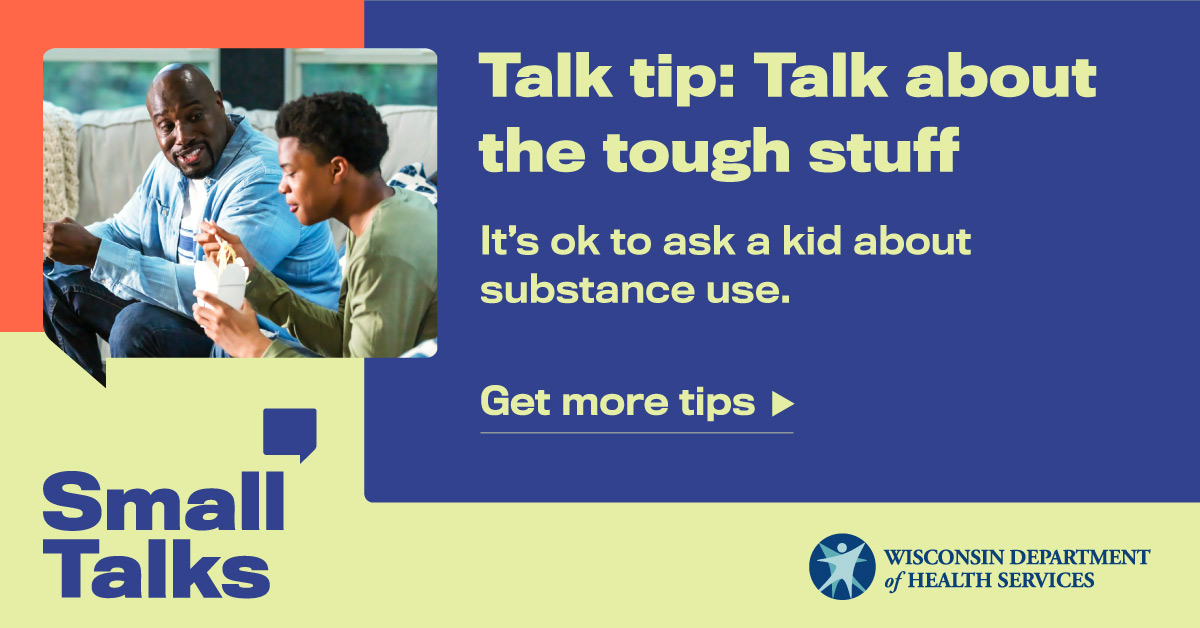

From friends to peer pressure to healthy choices: quick chats make a difference. Create a safe space that lets kids open up about substance use. Get kids to open up to keep the conversation going: https://www.dhs.wisconsin.gov/small-talks/index.htm #SmallTalksWI
-
(Download the don't panic image)
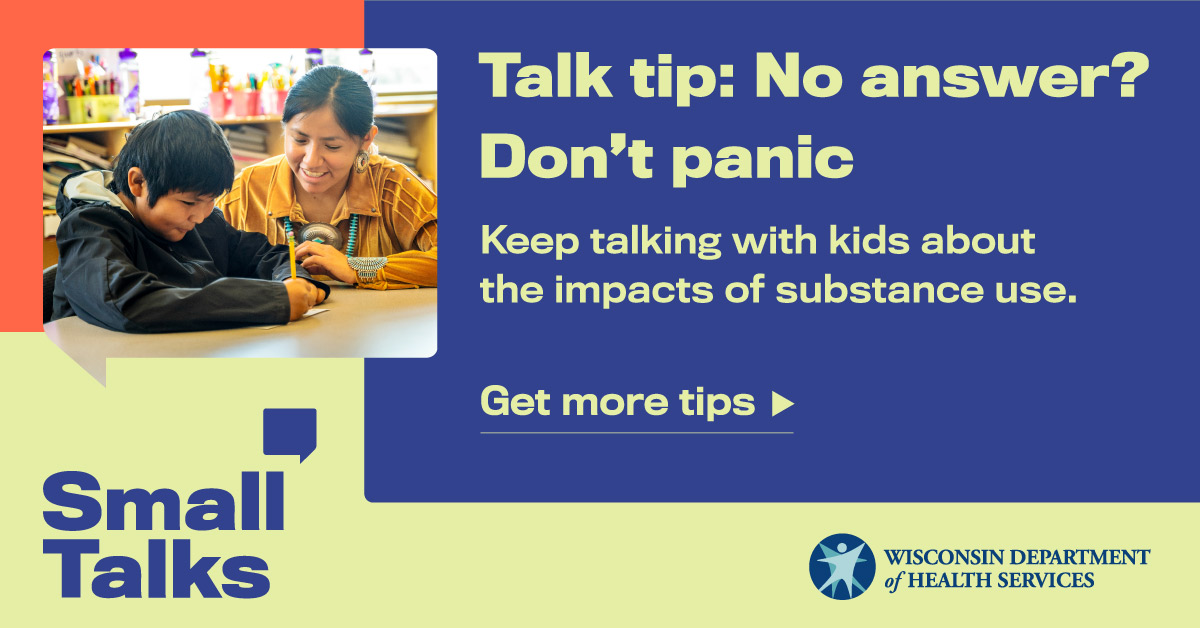

Just because a kid is quiet doesn’t mean they’re not listening, especially if you’re talking about ways to manage stress and say “No” to peer pressure about substance use. See how other caring adults have handled small talks: https://www.dhs.wisconsin.gov/small-talks/stories.htm #SmallTalksWI
-
(Download ask open-ended questions image)
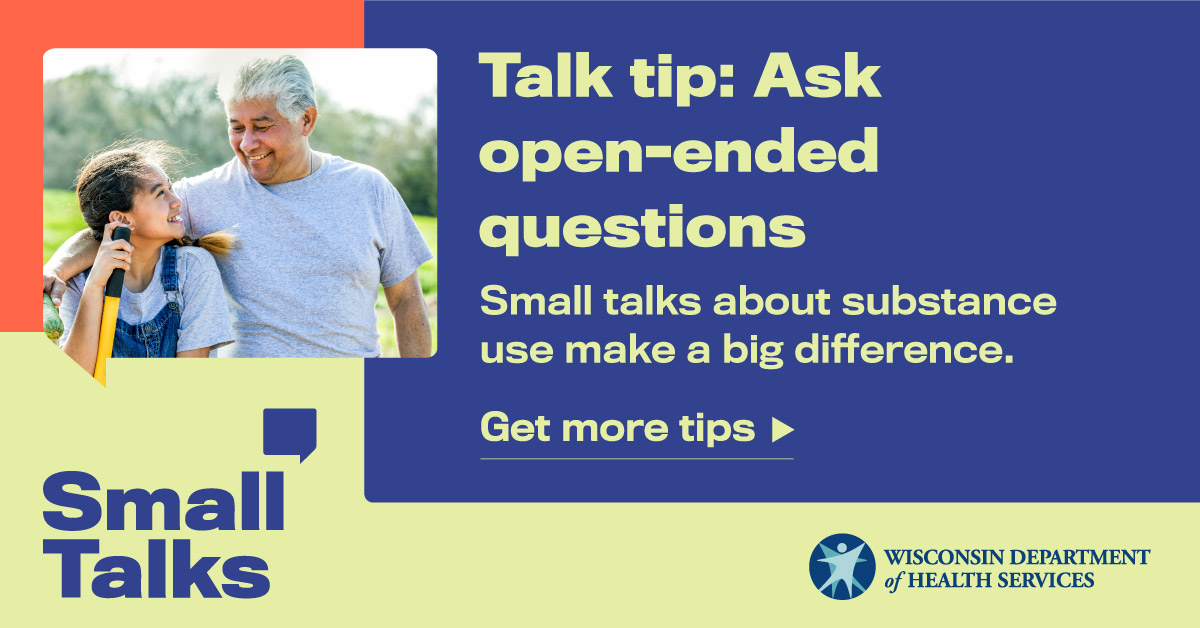

Want to get a kid to open up? Use questions that avoid yes-or-no answers. Ask about their thoughts about substance use they see in videos or social media— then follow their lead. See how other caring adults have handled small talks: https://www.dhs.wisconsin.gov/small-talks/stories.htm #SmallTalksWI
These social media posts are available in Spanish. Download a ZIP file with the Spanish talk tip images and text.
These images will work best on Facebook and LinkedIn. Send a message to DHSDCTSSMALLTALKS@
Instructions
- Download/save the image to your device.
- Upload the image to your account.
- Use the text below the image to complete the post.
(Download protect our shared story image 1)
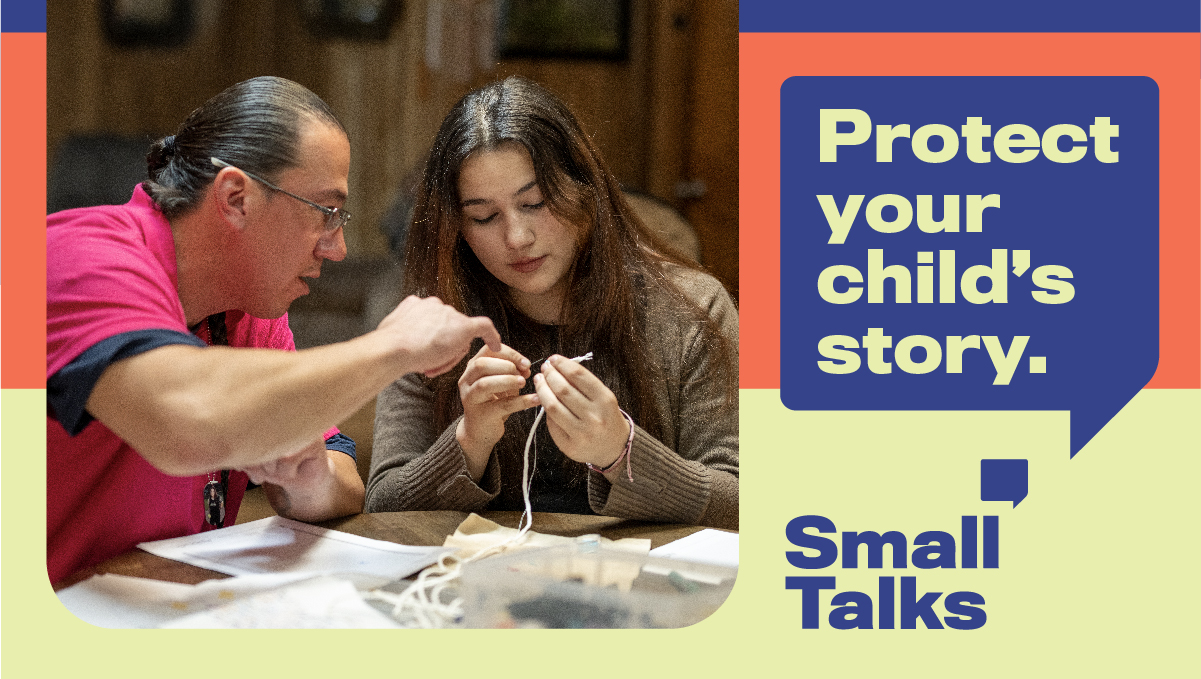
Any caring adult can be a powerful influence in preventing youth substance use. Start with small talks. Get talk tips at https://www.dhs.wisconsin.gov/small-talks/index.htm #SmallTalksWI
-
(Download protect our shared story image 2)
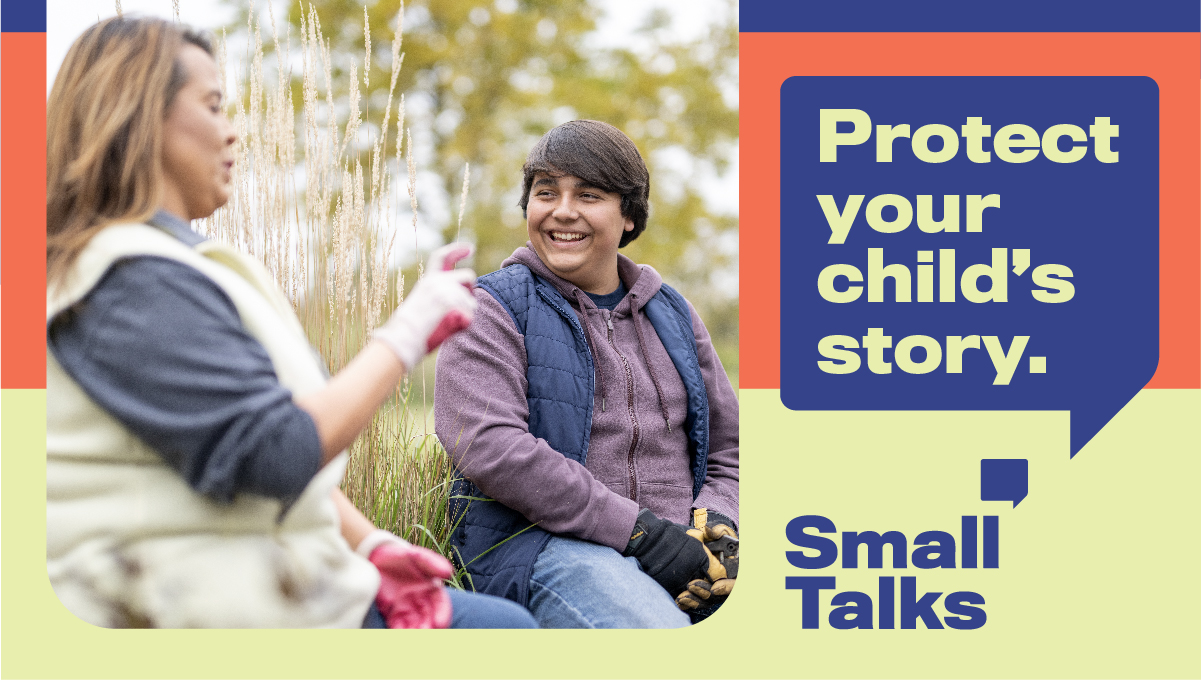
We all play a role in a beautiful story. Help protect it with small talks about the impacts of youth substance use. Get talk tips and more at https://www.dhs.wisconsin.gov/small-talks/index.htm #SmallTalksWI
-
(Download protect a child's story image 1)
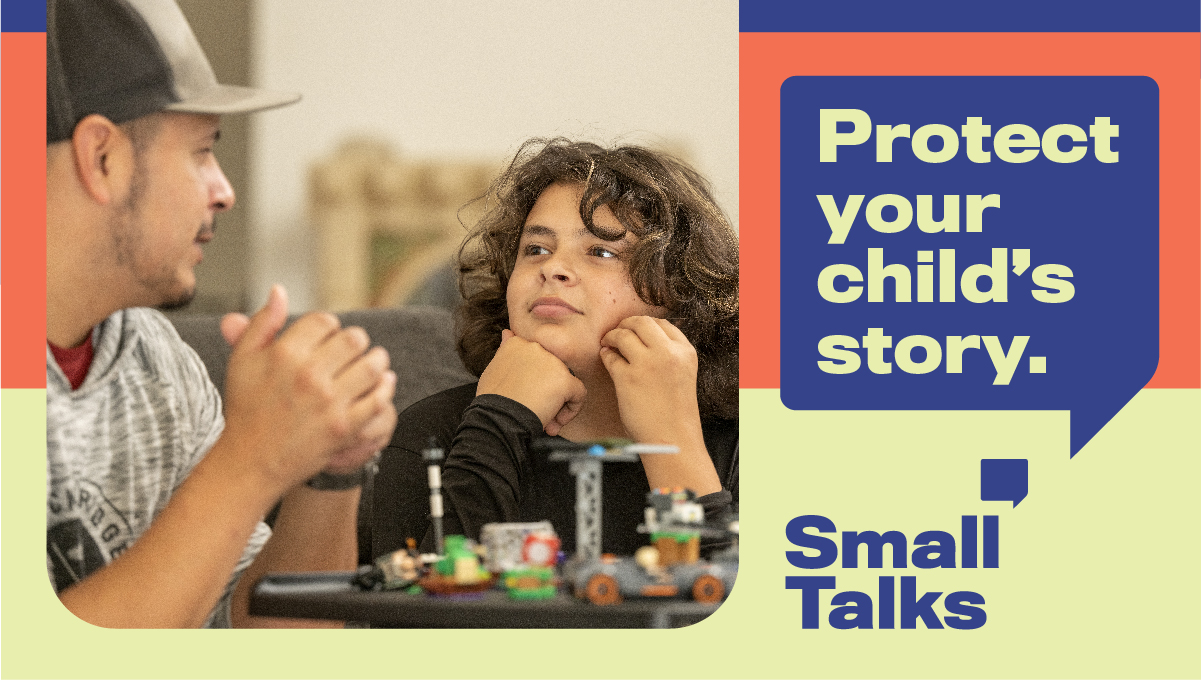
Parents and caregivers are a powerful influence in preventing youth substance use. Start with small talks. Get talk tips at https://www.dhs.wisconsin.gov/small-talks/index.htm #SmallTalksWI
-
(Download protect a child's story image 2)
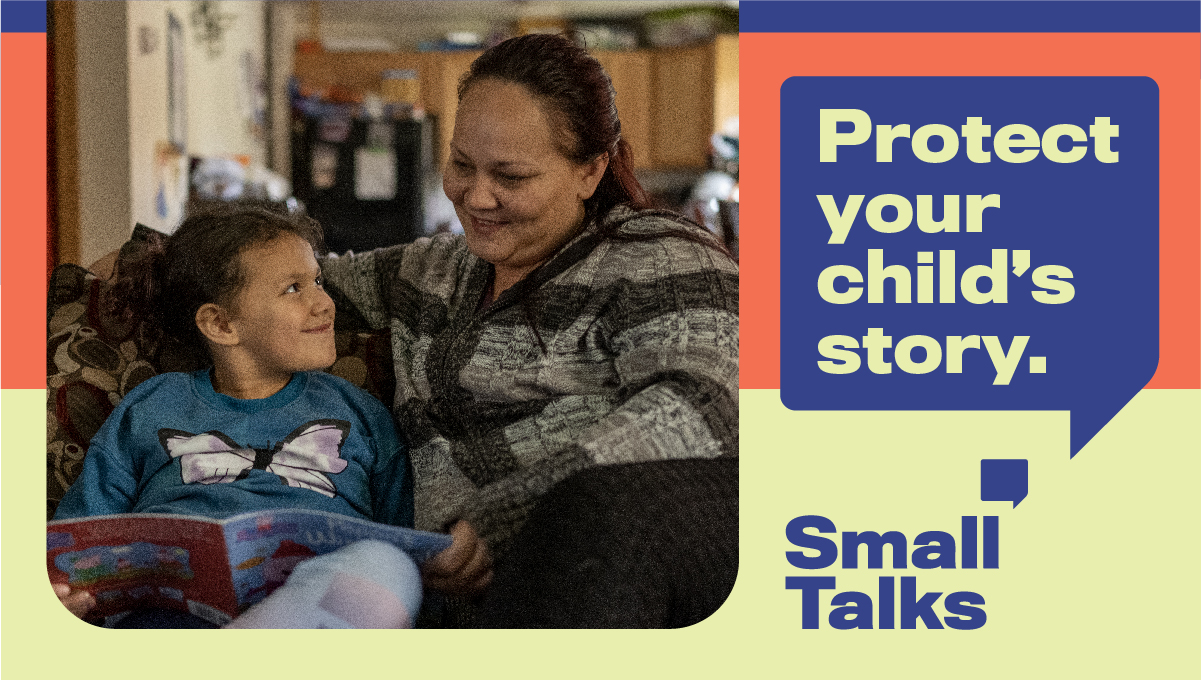
Your child deserves a beautiful story of their own. Help protect it with small talks about the impacts of substance use. Get talk tips and more at https://www.dhs.wisconsin.gov/small-talks/index.htm #SmallTalksWI
Videos
Promote the Small Talks campaign on your website or through presentations with local groups using these long-form videos.
Stories from parents and other caring adults videos
This series of videos is designed to encourage parents and other caring adults to talk to the kids in their life about the dangers of underage drinking. There are five videos. Each video explores a key challenge that parents and other caring adults face during their small talks journey, including how to work through stage fright to start having small talks, why preparing for small talks is key, why listening is an important part of small talks, why it is not important for small talks to be perfect, and why having lots of regular small talks over time is more effective than one big talk.
Go to the Small Talks: Stories from Parents and Other Caring Adults page to watch and share these videos.
Download the "getting over nerves" testimonial video (ZIP file)
Download the "getting prepped" testimonial video (ZIP file)
Download the "learning to listen" testimonial video (ZIP file)
Download the "bouncing back" testimonial video (ZIP file)
Download the "keeping it up" testimonial video (ZIP file)
Help us track the reach of the Small Talks campaign! Send an email to DHSDCTSSMALLTALKS@dhs.wisconsin.gov if you use these videos.
Promote the Small Talks campaign on social media channels with these short-form videos.
Download in-feed videos and story ads (ZIP file)
Download :30 testimonial videos (ZIP file)
Download the summer video (ZIP file)
Tag all Small Talks campaign social media posts with #SmallTalksWI.
Help us track the reach of the Small Talks campaign! Send an email to DHSDCTSSMALLTALKS@dhs.wisconsin.gov if you use these videos.