Environmental Health: Children and the Environment
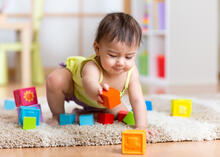
The environment plays a large role in children’s health. Children are more vulnerable to environmental hazards than adults for several reasons, including:
- Children eat more food, drink more water, and breathe more air relative to their body size than adults.
- Children’s behaviors, like putting their hands in their mouths and playing on the ground, can put them in contact with harmful materials more than adults.
- Children are still growing, meaning environmental hazards like lead exposure that can affect brain development is more harmful to them than adults.
For these reasons, it’s important to take steps to keep children’s environments safe.
In the home
Find resources on our healthy homes webpage to keep your home safe from indoor health hazards.
Steps you can take include:
- Addressing indoor air quality concerns like allergens and mold.
- Carefully choosing which fish to prepare and eat.
- Installing carbon monoxide and fire alarms and replacing their batteries two times a year.
- Reducing lead exposure.
- Storing and disposing of chemicals safely.
- Testing wells to make sure your drinking water is safe.
- Testing your home for radon.
Outside the home
To keep your kids safe while outside, take these steps:
- Apply bug spray and wear long sleeves and pants to avoid bites by mosquitoes and ticks.
- Avoid blue-green algae, which can be present in lakes and rivers.
- Follow the instructions in our Wash Your Hands!, P-01710 (PDF) flyer to safely and thoroughly wash their hands after playing outside. This is especially true if they were playing on a playground with recycled rubber, P-00193 (PDF), with animals, or working in a garden.
- Wear life vests and follow other safe boating practices.
- Wear sunscreen.
In childcare programs
Children may spend time in a childcare facility. Our Choose Safe Places Program helps childcare providers in Wisconsin choose and maintain environmentally safe locations by offering free consultation services. This applies to providers of certified and licensed group and family childcare programs. Fill out the Choose Safe Places Property Checklist, F-02410 which is available as a PDF in English, Spanish, and Hmong, as well as in an online submission format.
Our Safekeeping Campaign webpage also has free resources on chemical safety, air quality, and water quality.